
How lipstick became music’s most versatile symbol
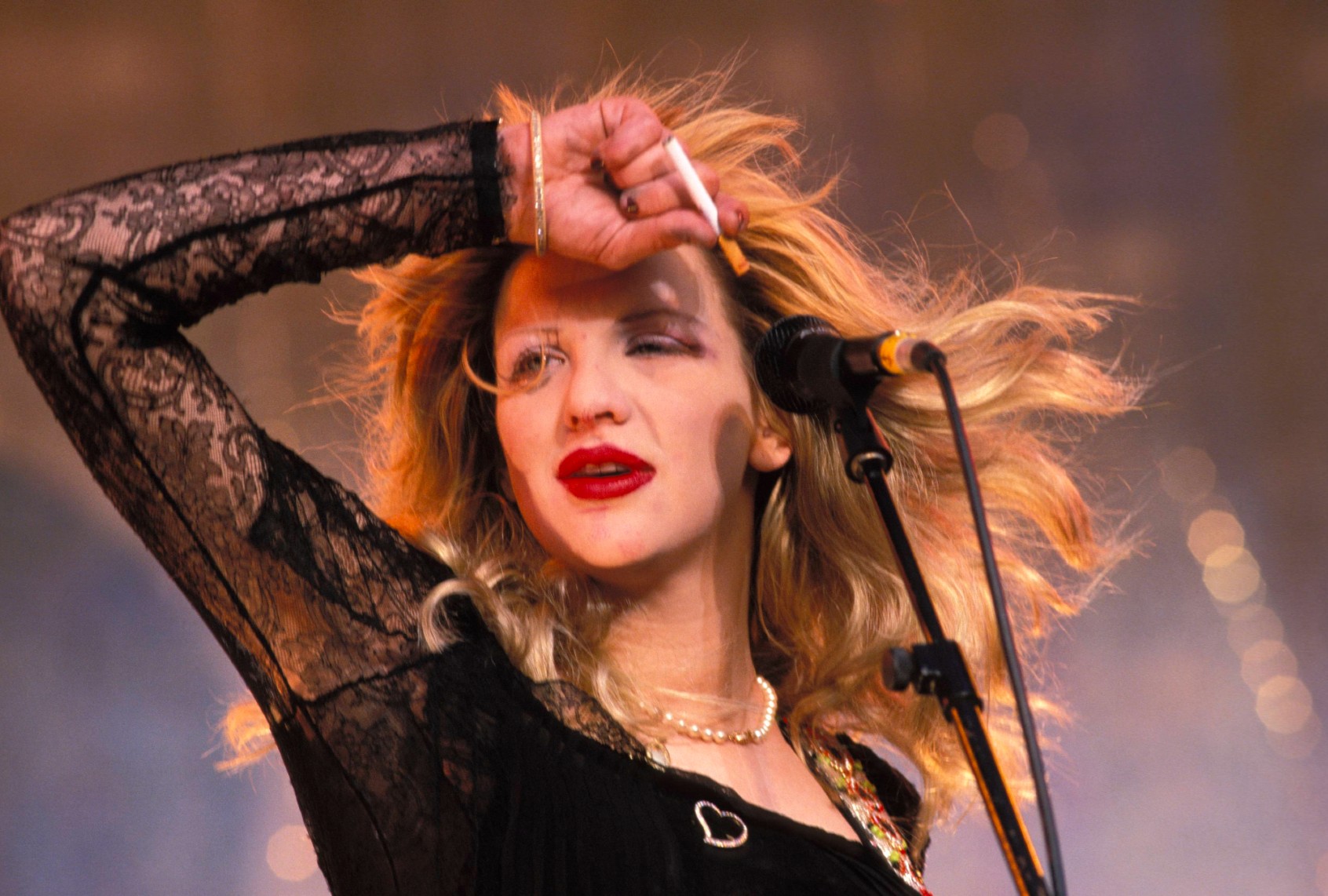
“I nail my mouth to the evil taste of lipstick, inhale the scent of someone else’s lipstick…”
Wadded up Kleenex smudged red. A can of aerosol deodorant. A tube of lipstick tossed onto a scatter of counter clutter. After a two-second shot of cosmetic detritus, Suzi Quatro struts onscreen, clapping her hands to the beat of the drummer behind her. Her lips are a neutral dusty mauve, her bass guitar a lustrous red. “I’m tired of making up while you’ve been making out with someone else’s makeup,” she spits in her signature punk parlando.
It’s 1981, and Quatro, a pint-sized, leather-clad, four-string-plucking badass, may be the first to feature lipstick in a music video. “Lipstick” confronts a common 20th century trope: catching (or, in this case, tasting) male infidelity through the tell-all lipstick stain. While Quatro clearly isn’t against wearing makeup — her eyes rimmed with smoldering charcoal as she scowls at the camera — lipstick is a way to distinguish herself from her lover’s lesser side chick, a woman whose lipstick is described as “sticky,” “scarlet” and “purple,” before dismissed by Quatro as “trashy trashy trashy” in the song’s snarling send-off.
As a totem of romantic competition, feminine seduction, patriarchal repression, and erotic lust, lipstick has swiveled its head into a range of music videos since the multimedia genre’s explosion in the 1980s. Tracing lipstick’s ruddy arc across the years, we can see how wildly its meanings diverge. Conspicuous lip color can, after all, signify a million things — from class status to sardonic camp.
In 1994, Tori Amos’ U.S. video for her piano anthem “Cornflake Girl” presents a coven of quarreling young women driven through the desert in the back of a pickup truck. Upon the track’s climactic bridge, the quartet-plus-Tori circle a beefcake cowboy bathing in a metal trough, disarming “the man with the golden gun” by synchronously cocking their lipsticks as though from invisible holsters at their hips. As each pink or mauve bullet juts out from its metal tube, the effect is comically phallic and femme at the same time. In the brutal terrain of female cliques, beauty remains a potent, if unreliable, weapon — one which Amos, her grin a glistening pink, wryly acknowledges and critiques.
A year later, the alternative rock band Eve’s Plum, fronted by Colleen Fitzpatrick, conflated wearing lipstick with female voicelessness. “My lipstick was glue stick,” she sings in “Lipstuck,” “it sealed my fate, not even able to communicate.” Vaguely grunge in vibe, the track overtly recalls second feminism’s suspicion of feminine adornment. “I’ve been a victim of fashion, unjustly applying berry passion,” goes the final refrain. In a song where vanity means being a “slave to makeup,” appearing willfully feminine might as well mean handing over your free will. But by 2000, in her later solo turn as pop act “Vitamin C,” Fitzpatrick would not only drop her anti-lipstick stance but lend her moniker to a lipstick shade by Tommy Hilfiger. This was around the time that anti-feminine feminism faded into Third Wave reassessments of girly adornment. By the early aughts, erstwhile edgy rock stars like Courtney Love and Nina Gordon swapped their torn fishnets and rumpled slip dresses for French manicures and blown-out coifs. Pretty was undeniably in again, and often so anodyne that even lipstick lovers like myself longed for the days of an angsty anti-makeup manifesto.
Over two decades later, pop-cultural attitudes towards lipstick — and overtly femininized self-adornment — have veered again, as evidenced by distinctly queer iterations of hyper-femme aesthetics. Take nonbinary icon Janelle Monáe’s 2023 music video for “Lipstick Lover,” an ode to sapphic eroticism set at a bacchanalian pool party where booty cheeks vie with painted pouts for the artist’s and the viewer’s visual attention.
Want more from culture than just the latest trend? The Swell highlights art made to last.
Sign up here
“I like lipstick on my neck,” Monáe declares, as an array of puckered-up femmes approach her supine form. “Hands around my waist, so you know what’s comin’ next.” If lipstick in the mid-nineties was capitulation to patriarchal, and presumably heterosexual norms, here it is both a badge of Black, queer, feminine approval and a mark of messy, sticky pleasure — as well as a stand-in for other lips playfully mimicked across the video. “Leave a sticky hickey in a place I won’t forget,” Monáe begs. “Baby, I’m obsessed, get me undressed.”
Queer desire, femininity, and lipstick form an intrepid triptych in the form of pop star Chappell Roan, whose persona betrays both her rural Missouri provenance and the glittery legacy of drag performance. In her 2024 Tiny Desk Concert for NPR, Roan is surrounded by seven femme musicians, each wearing red lipstick, blue eyeshadow, a pink button-down or a red party dress. Roan’s fiery hair is piled in a foot-high bouffant above a rhinestone tiara, her face layered in kabuki-like powder. “Knee-deep in the passenger seat and you’re eating me out,” she croons to an inferably female auditor, her lipstick displayed on not only her cupid’s bow but prominently on her two front teeth. “But we’re casual now, we’re casual now.” Calling attention to hook-up culture’s endurance among Gen Z, Roan recasts hyper-femininity in a lesbian context. Camp vulnerability and country vibes mingle in a mashup of queer exuberance and Marie Antoinette libertinism: between songs, Roan waves a pink feather fan.
Sterling Tull, the makeup artist and drag queen responsible for Roan’s “camp-meets-couture” look, has emphasized since that lipstick on the teeth was wholly intentional, as the singer wished the band to look like they “went through hell, they just cried their eyes out, they just had enough of it and smeared their lipstick.” These chaotic touches “add to Chappell’s look, because Chappell has a few things that are kind of going awry on her face.” Roan’s lipstick gone “awry” on her teeth brings a camp sensibility to both mock and celebrate feminine performance that resists traditional heteronormative constructs. As Tull puts it, her lipstick “embolden[s] people to become more interested in drag and playing with their identity and gender.”
From Suzi Quatro’s “trashy trashy” lipsticked nemesis to the “white trash” splendor of Chappell Roan, showy lip color has gone from being a telltale sign of hetero canoodling to a sign of the humiliation of falling for a woman who refuses to return your texts. Bright lipstick isn’t just for the heartbreaker; it’s also for the heartbroken. Clearly, lipstick is no longer limited to straight girls trying to steal someone’s sh*tty boyfriend.
Read more
about this topic