
Scientists resist Trump’s war on climate data
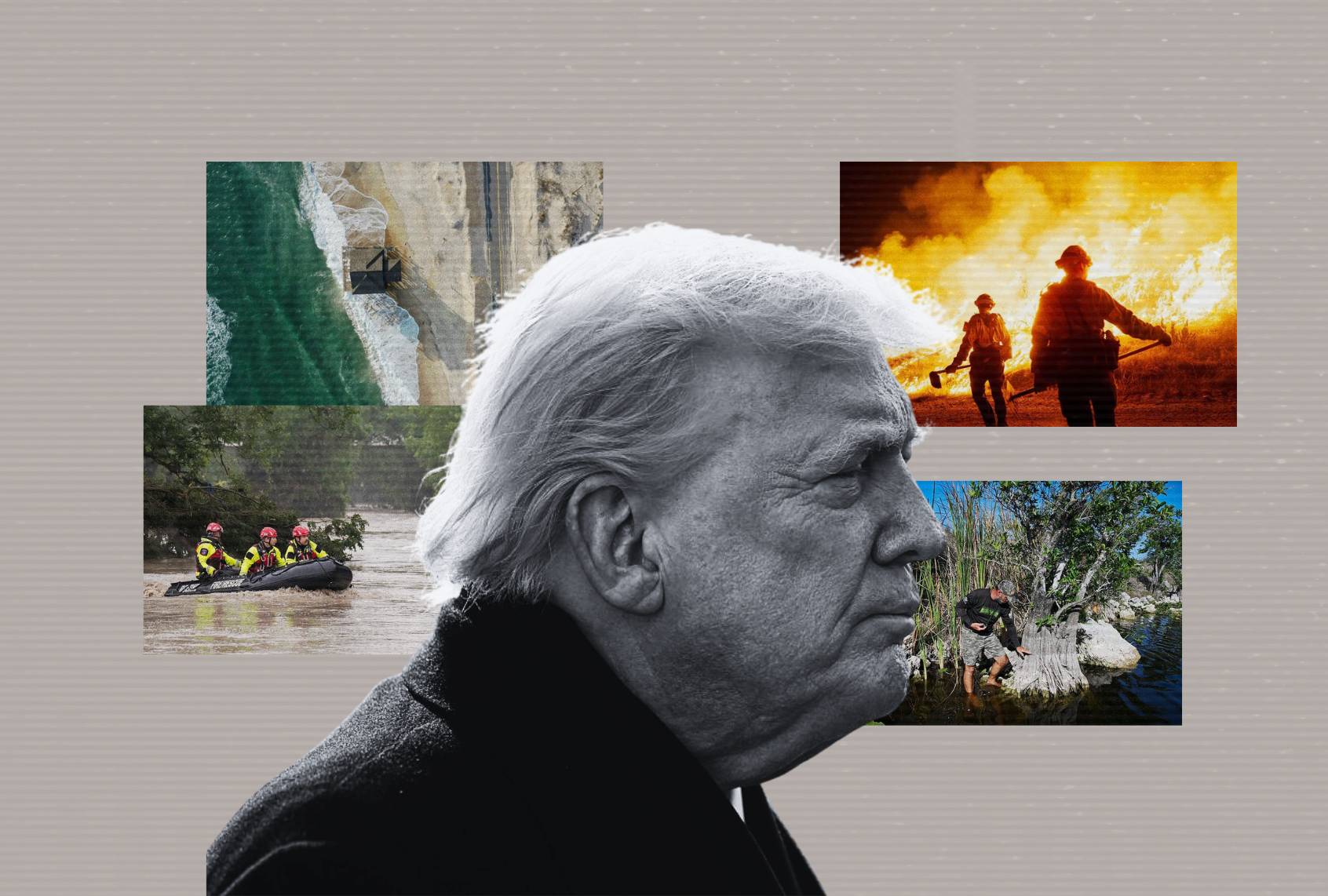
Earlier this month, President Donald Trump mentioned the brutal winter storm hitting the U.S. and asked, in all caps, “Whatever happened to global warming?” The ignorance of this statement is one thing, but easily explained: rising temperatures are linked to more extreme weather, including colder winter storms as melting ice caps tend to push cold air south, creating polar vortices like the one we’re experiencing. We can think of climate change as a pendulum: as it intensifies, it swings from one extreme to another, hot and cold and dry and wet. But Trump, who has called climate change a “con job,” would rather people ignore the data on this growing crisis, because if we can’t measure it, maybe we won’t notice it’s happening.
In the last year, the Trump administration have enacted a systemic purge of government-supported climate science initiatives and data. The U.S. government website climate.gov no longer mentions human-caused climate change; the National Climate Assessments have been scrubbed from government websites; the National Center for Atmospheric Research is slated for a complete dismantling; and over 3,000 datasets collected by the government’s constellation of science agencies are gone or tampered with beyond recognition.
Trump has additionally yanked the U.S. out of the Paris Climate Change Agreement for a second time and slashed a number of Environmental Protection Agency rules designed to curb pollution from power plants and cars, maintain clean water, and prevent states from letting smog flow into the air of neighboring states, all while waging a war on renewable energy.
A network of scientists and nonprofit organizations, determined to keep their projects alive, are running a desperate but resilient effort to save vital information and to keep the money flowing — if not from the federal government, then from philanthropy and other sources of revenue. By as early as last summer, organizations like Climate Central, a nonprofit news group, have successfully restored operations for key projects like the National Oceanic and Atmospheric Administration’s (NOAA) U.S. Billion Dollar Climate and Weather Disaster dataset, often re-hiring the same scientists the Trump administration had just laid off.
Climate Central, a small organization of just 50 people, has had to carefully prioritize which initiatives to restore immediately, and which to let lie dormant for the time being.
“We don’t have a ton of extra bandwidth to take on new projects or try to build things that have taken years to build for the federal government and maintain,” Kristina Dahl, vice president for science at Climate Central, told Salon. “But something like the billion dollar disasters data set is key data that many people rely on across different sectors, from nonprofit organizations like ours that have used it for years and years as a communications tool, to the insurance industry that looks to that data set to try to get a handle on the scale of the losses from climate and weather-related events over time.”
Climate change is an unfolding disaster that is already causing an escalation of flooding, wildfires, hurricanes and other immediate shocks. In the 1980s, there was one billion-dollar disaster event in the United States every 82 days, on average — in 2025, there was one every 10 days. The last three years have been the hottest on record. Despite the urgency and the real lives lost or ruined, the Trump administration is still proposing further cuts for Fiscal Year 2026 on the very agencies that might try to understand or mitigate the damage, including the National Science Foundation, the EPA, and NASA.
“We should strive to build a science infrastructure or a scientific foundation for this country that is responsive to the needs of the the U.S. population.”
This is not the first time a president has frustrated the scientific community. Even as former President Barack Obama introduced the Clean Power Plan in 2015, that year’s federal budget also included a $60 million cut to the EPA. Nevertheless, climate scientists and research nonprofits find themselves dealing with cuts on an unprecedented scale, and dealing with an administration that no longer maintains any pretense of acknowledging anthropogenic climate change. In addition to ensuring the survival of ongoing projects, non-governmental organizations like the Data Rescue Lab and Harvard Library Innovation Lab are working to move information from federal servers to independent mirrors, in hopes of preempting any government effort to permanently delete the information.
The American Geophysical Union, meanwhile, is nominating American scientists to work on reports by the United Nations Intergovernmental Panel on Climate Change, a task that was traditionally carried out by the federal government. The organization is also helping to coordinate a compilation of research that can replicate the National Climate Assessment, a series of reports on U.S. climate change that Trump struck down last year.
Start your day with essential news from Salon.
Sign up for our free morning newsletter, Crash Course.
“Congress had passed a law that requires this report to be researched, written and submitted by the federal government. Several months ago, this administration announced that they were letting go of the contractor and all of the authors who were working on this very important research,” Janice Lachance, the union’s CEO, told Salon. “We started thinking about a construct where we could invite the authors to submit their unfinished government work to one our 24 peer-reviewed journals or the American Meteorological Society, who are part of a great collaborative effort.”
The transfer of sovereignty over climate research from the public sphere to the philanthropic sector is a process borne out of necessity. In addition to possessing fewer resources and lacking official imprimatur, nonprofit organizations, with more flexible budgets but also more reliance on donors, are geared towards actionable projects rather than long-term maintenance that require massive investments. At the same time, they also avoid rules that, in theory, enforce “policy neutrality,” and do not place their life and death in the hands of a single executive or political appointee. This has allowed Climate Central, for example, to “fine-grain” the climate disaster dataset “in ways that [lead scientist] Adam Smith had been unable to get traction for while the project was attached to the government,” said Dahl.
“Similarly, with the monthly climate briefing that NOAA was doing, we were able to bring in some interesting information about how much of the change we’ve been seeing is directly attributable to climate change,” Dahl continued. “We brought in guest speakers to talk about it with a little more leeway about what’s happening right now in our climate, beyond just the basics of our data.”
These groups are not competing against an administration that has simply conceded responsibility to them, but one that is actively filling the airspace with widely-discredited theories on climate change. Last summer, the Department of Energy, under Secretary Chris Wright, recruited five marginalized researchers to compile a 141-page document arguing that climate change was a “challenge — not a catastrophe,” and therefore grounds to repeal restrictions on pollutants. A group of 80 scientists responded with an independent fact-check that criticized the document as partisan and wildly unscientific.
An ideal-case scenario for laid-off climate scientists would be for a more science-friendly administration to return to power and re-open access to infrastructure like orbital satellites that cannot easily be replicated by a nonprofit organization. At the same time, they are also imagining what independent climate science research would look like after having carried an unprecedented burden. Because nonprofits are not public utilities, they are not obligated to share all of their research to the wider population and might be pressured to focus on projects that address the specific risk management concerns of their donors. The transposing of a public role on a nonprofit world over the last year, Lanchance said, is an opportunity to keep the knowledge democratized.
“We should strive to build a science infrastructure or a scientific foundation for this country that is responsive to the needs of the the U.S. population and the global population in ten years from now,” Lanchance said. “Not just in helping people conduct research, but also advocacy at the federal government level and, absent their help, maintaining a refuge where research cannot easily be deleted or overwritten.”
Read more
about climate change