
“The Testament of Ann Lee” shows us that utopia is possible
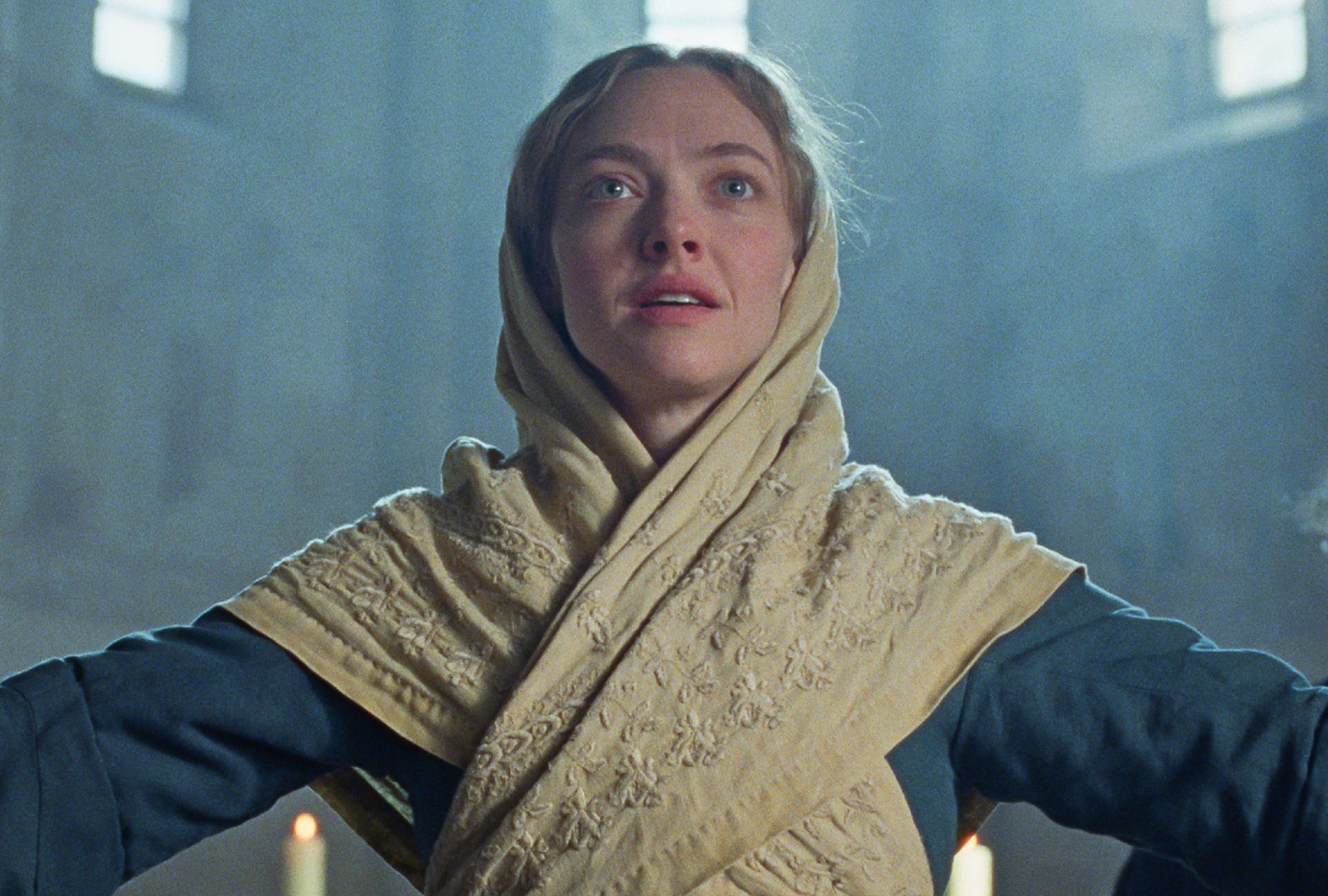
Among the low, static chatter of the everyday, a woman throws her head back and cries out. Her voice pierces the sky and cuts through the marrow of modern apathy. Her contorted expression is rotted by anguish, as though life’s unbearable burdens have laid waste to their latest victim. Then, her expression changes. She softens and regains her complexion. Her breathing steadies and becomes rhythmic, and her once-dissonant scream is made rich and clear, settled by some divine conviction. For all those ailing, lost and hopeless, do not be discouraged. Put your trust in Mother Ann and let the dulcet sound of her song lead you, arms outstretched in exaltation, toward certain righteousness.
As a film, Mona Fastvold’s magnificent religious epic, “The Testament of Ann Lee,” is the finest piece of cinema this year — a startling and clear-headed work of genius, led by a remarkable Amanda Seyfried in the film’s titular role. But as a feeling, it’s far more akin to gospel, like a baroque passage of biblical scripture comparing the earthly limitations of the body and the endless possibilities of the mind. To say that “The Testament of Ann Lee” will make you believe in God is not quite correct, if only because that line of thinking is too reductive to fit the wonderfully nuanced utopia that the movie presents. Rather, Fastvold asks viewers to see God in themselves and in their fellow humans, to find spiritual power in movement, and divinity in personal restriction. The film is at once grand and intimate, as if it were expanding and contracting with the pulse of Ann Lee’s fervent congregation of Shakers, who pledged devout celibacy and pursued physical pleasure through loud, thumping worship.
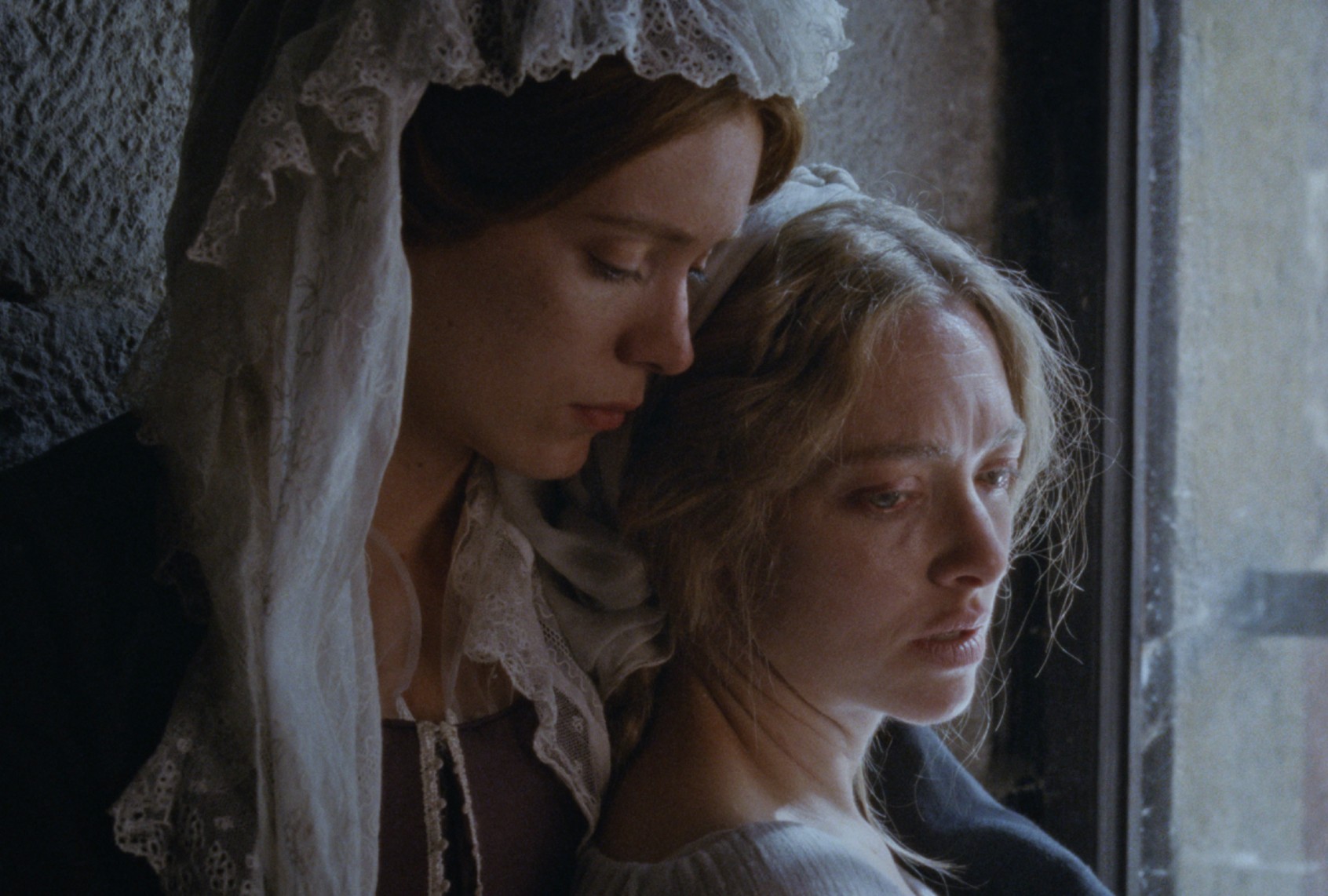
(Searchlight Pictures) Stacy Martin and Amanda Seyfried in “The Testament of Ann Lee”
Time and again, Ann’s hope is met with heart-wrenching pain, and to hear Seyfried’s angelic voice laced with her character’s despair is quite unlike anything I have ever experienced watching a film, musical or otherwise.
The film is a musical, but not in the traditional sense. It’s a story of crusading feminism, but it’s not overtly political. It’s a historical account, but far from the dull biopic. That “Ann Lee” exists entirely outside the realm of comparison to anything else released this year would be admirable as it is. But Fastvold turns a singular strangeness into something so familiar and warm — a picturesque version of religious worship where anyone and everyone may find comfort in a community of voices, all singing the same song. As “The Testament of Ann Lee” steadfastly weaves between dark and light, trials and triumphs, Fastvold and Seyfried create an image of faith so powerful that it makes a mere movie look like a miracle. Surely, one thinks, this is what it must feel like to experience God.
Born to a destitute family in Manchester, Ann grows up blighted by the constant sights of cruelty and sexual sin. She observes the way women around her, including her own mother, are subjugated by the church, practicing their marital vows as if they were sworn human obligations. Attuned with the divine from her earliest age, matters of the flesh repulse her, conjuring visions of serpents and carnal sin. Despite her aversion, Ann eventually marries a strapping blacksmith named Abraham (Christopher Abbott), who shares her curiosity about a growing sect of Methodists known for their erratic, full-bodied worship. Gathering with the devout alongside Abraham and her brother, William (Lewis Pullman), Ann finds the lightness she’s been seeking. “For those who confess, shams are over and reality has begun,” one religious leader tells them. When the congregation responds with rhythmic panting that slowly builds to shrieks of grief and passion, Ann finally feels at home — the burdens she’s been carrying all her life, cast into the ether.
But heavenly providence does not come easily for Ann. She remains mired by her lot in life as a woman, subject to Abraham’s growing desire to start a family. Tragically, none of Ann’s four children lived more than a year past their birth, and the film recounts the close period between all four deaths with astonishing, unflinching honesty. Referring to this sequence as a “musical number” would be a disservice to the gravity Seyfried and Fastvold convey in the length of “Beautiful Treasures,” a mother’s lament and one of the film’s most exquisite songs. Time and again, Ann’s hope is met with the heart-wrenching pain of loss, and to hear Seyfried’s angelic voice laced with her character’s despair is quite unlike anything I have ever experienced watching a film, musical or otherwise.
Want more from culture than just the latest trend? The Swell highlights art made to last.
Sign up here
Each song in “The Testament of Ann Lee” is infused with stirring resonance, courtesy of Oscar-winning composer Daniel Blumberg, who worked with music partially adapted from traditional Shaker hymns. The lyrics are simple, unencumbered by a conventional musical’s desire to grab the audience with a catchy tune. Yet, once you hear Blumberg’s songs, you’ll never forget them. These hymns need nothing more than measured repetition over a few beautiful melodies to stick. Even a recurrent but unadorned lyric like “I hunger and thirst” becomes an instant earworm. And though the songs are austere, their performance is far from it. Intricate group choreography finds the Shakers swaying and stretching in tandem as if their hands were reaching up to pull God closer to Earth — or the congregation closer to Heaven.
In telling Ann Lee’s titanic story, Fastvold has made something so incredibly bold, important and effective that it’s enough to make one genuinely believe in God. After all, what is God if not the clear presence of beauty, and the indication that there is more of it than we thought possible?
Driven to the edge of her mind with grief, Ann reconciles her misery with a vow of celibacy. She believes God punished her for denying her natural aversion to sex, and that spreading the virtue of abstinence is a means of contrition, communicated to her by a vision of Adam and Eve, cast out of the garden. Ann’s vehemence is met with willful misinterpretation and misogyny. A woman preacher is pure blasphemy. And despite her sworn pacifism, Ann’s sermons are met with violence at the hands of those who see her celibacy as a violation of natural law.
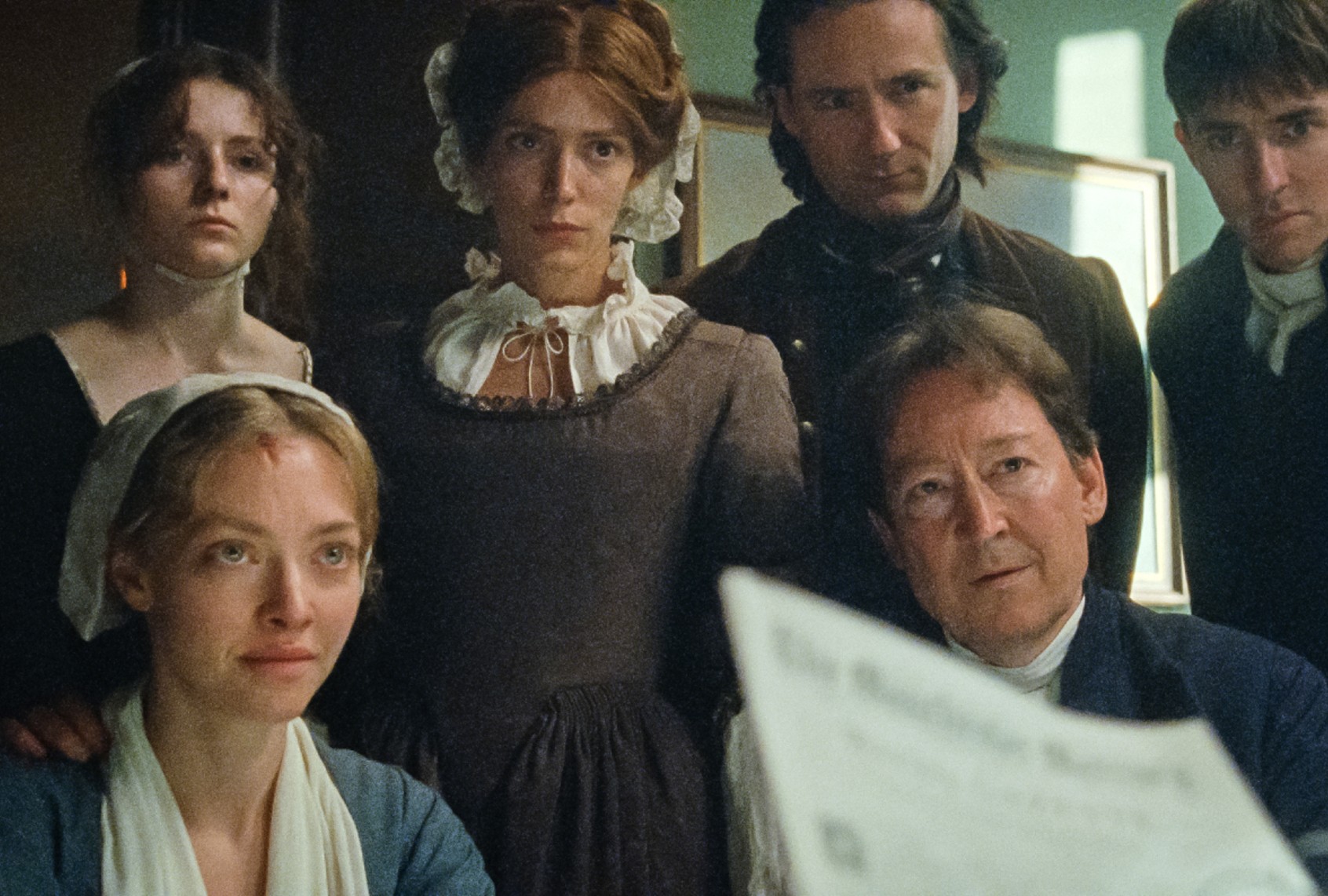
(Searchlight Pictures) Amanda Seyfried, Thomasin McKenzie, Stacy Martin, Lewis Pullman, Scott Handy and Matthew Beard in “The Testament of Ann Lee”
And yet, each time her methods are questioned, Ann emerges more resolute than before. She starves herself for her cause, crosses oceans and tills land to create the utopia that she believes is possible. Throughout her impossible journeys, Seyfried speaks and sings with such a clean, unwavering voice that one can’t help but believe Ann really was God’s earthly vessel. Her performance is one for the ages, a gnashing, robust physical achievement that cements her as one of the greatest actors of her generation. This would be a career-defining role for any artist, but one gets the sense that, like Ann, Seyfried was divinely chosen. The film clearly means a great deal to her, and she uses all of her impeccably honed strengths as a performer to carefully emphasize that Ann’s way of life was not kooky or fanatical, but beautiful.
It’s not just Ann’s passion that’s so affecting; it’s her message. Shakerism is about gender equality, empathy and social unity. At its peak, there were over 6,000 Shakers, joining Ann in rebuking the gruesome, incalculable evils of war and preaching moral generosity. Fastvold makes being a good person look easy, and perhaps that’s why “The Testament of Ann Lee” feels so damn extraordinary: This is the antithesis of all of this year’s high-concept films desperately trying to unravel the ethically dubious states we’ve found ourselves in. While movies like “One Battle After Another,” “Eddington” and “Bugonia” wrestle with our modern Hell, “The Testament of Ann Lee” asserts that Heaven is just as conceivable —and doesn’t require any of the pandering narrative devices or trite, buzzword-filled dialogue to get that simple message across. All it demands is your faith.
In telling Ann Lee’s titanic story — her desperate, earnest attempt to build a utopia — Fastvold has made something so incredibly bold, important and effective that it’s enough to make one genuinely believe in God. After all, what is God if not the clear presence of beauty, and the indication that there is more of it than we thought possible? Somewhere along the way, we began to believe that a miracle must be a spectacle, or some big, irrefutable sign that God is real and among us. But, if “The Testament of Ann Lee” is to be believed, a miracle is as simple as walking out of a movie theater feeling changed and empowered, no matter what kind of world awaits. If a film as spectacular and original as this can exist now, there must still be some sunlight left on the other side of the door.
Read more
about unconventional biopics