
Sunyani Technical University Advances Ghana’s Green Mobility Future Through Innovative EV Research Centre
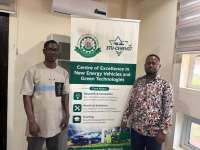
As Ghana explores cleaner transportation and sustainable energy solutions, Sunyani Technical University (STU) is taking practical steps to strengthen the country’s electric mobility ecosystem through its Centre of Excellence in New Energy Vehicles and Green Technologies (STU-CENEVGT).
Established in 2024, the Centre seeks to advance research, design, assembly and innovation in electric vehicles (EVs) and environmentally sustai2nable technologies, with particular emphasis on solutions suited to Ghana’s transportation and energy needs. STU’s Centre of Excellence in New Energy Vehicles and Green Technologies is promoting homegrown engineering solutions in electric mobility, renewable energy and sustainable transportation.
Currently, the Centre is embarking on a new project direction focused on EVs and emerging technologies, led by Engr. Dr. Samuel Jonas Yeboah, Principal Investigator. Dr. James Adu Ansere serves as the international co-investigator from the Canada Excellence Research Chair for New-Gen and Technology Lab at Memorial University of Newfoundland, Canada. Both investigators are affiliated with the Department of Electrical and Electronics Engineering at STU.
Its establishment reflects a growing recognition that Ghana’s transition to electric mobility requires more than vehicle imports. It demands local engineering expertise, practical innovation, technical training and stronger collaboration between universities and industry.
Turning Engineering Research into Practical Innovation
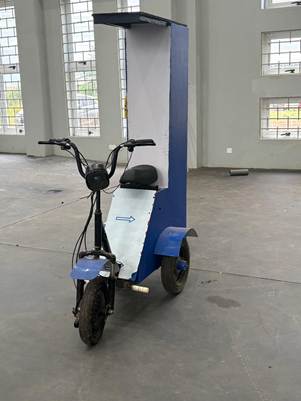
Fig.2: A three-wheeled electrical mobility prototype showcased in the Centre’s engineering workspace, highlighting opportunities for locally adapted transport solutions.
At the heart of STU-CENEVGT is a commitment to translating academic knowledge into practical engineering solutions. The Centre’s activities are structured around three core pillars: Research and Innovation, Practical Solutions, and Training.
Its research interests include electric mobility, renewable energy integration and climate-resilient technologies. Practical development priorities encompass internal combustion engine (ICE)-to-electric vehicle conversions and the localised assembly of two-three- and four-wheelers.
The Centre’s engineering workspace features several light mobility platforms that illustrate opportunities for vehicle modification, electric propulsion research and locally adaptable transportation technologies.
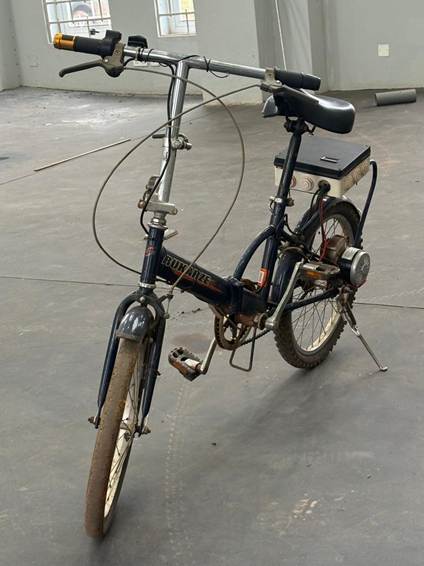
Fig. 3: A bicycle-based mobility platform fitted with electrical components, illustrating opportunities for applied research in affordable electric transportation.
These small-scale vehicle platforms provide opportunities to investigate propulsion systems, energy storage, vehicle controls and the technical requirements of low-cost electric mobility.
For Ghana, where motorcycles and other light vehicles support everyday transportation and commercial activities, adapting such technologies could offer practical pathways towards cleaner and more affordable mobility.

Fig. 4: A converted ICE-to-electric motorcycle platform in the Centre’s engineering workspace, relevant to research into vehicle adaptation.
Exploring Solar-Powered Transport Solutions
Beyond conventional electric mobility, the Centre is exploring how renewable energy can support practical transportation applications.
One notable concept is a solar-powered electric utility tricycle featuring a wheelbarrow-style tipping bucket, intended to combine clean energy with a functional cargo transport system.
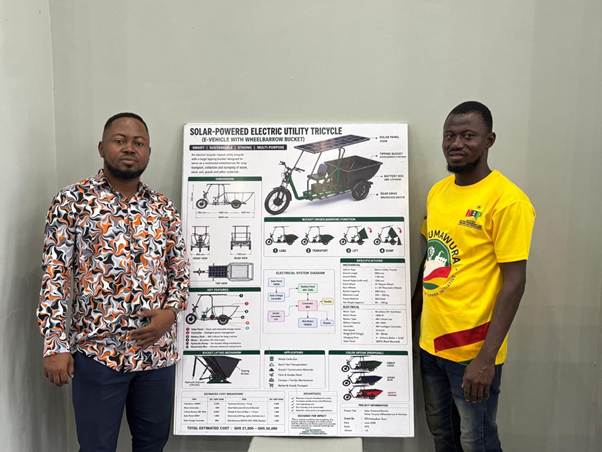
Fig. 5: Engr. Dr. Samuel Jonas Yeboah (left) and technician Mr. Bawa Halidu (right) presenting the technical design of a proposed solar-powered electric utility tricycle.
The proposed system incorporates electric propulsion, solar energy integration and a tipping cargo mechanism, with potential applications in waste collection, agricultural logistics, community services and local goods transportation.
The concept highlights an important dimension of the Centre’s research agenda: developing technologies that respond to local economic activities rather than simply replicating solutions from established automotive markets.
Further prototype validation and testing would be necessary to establish the system’s performance, cost-effectiveness and suitability for wider deployment.
Building Skills and International Research Partnerships
Alongside technology development, STU-CENEVGT is committed to strengthening Ghana’s technical workforce through practical training and research participation. Its training agenda emphasises the development of skilled, gender-inclusive engineering talent capable of contributing to electric vehicle design, assembly, maintenance and renewable energy systems.
The Centre also presents opportunities for collaboration with international universities, automotive manufacturers, clean energy companies and development organisations. Such partnerships could support joint research, prototype testing, knowledge transfer and funding for the development of locally relevant green mobility technologies.
Collaboration and Research Partnerships
The Centre welcomes external collaborators, research institutions, industry partners and development organisations interested in jointly advancing innovative projects in electric mobility and green technologies.
STU-CENEVGT seeks to establish strategic, mutually beneficial partnerships focused on joint research and development, technology transfer, prototype development, capacity building and collaborative funding opportunities.
Through these partnerships, the Centre aims to combine expertise, resources and technological capabilities to deliver targeted, impactful and sustainable solutions that address real-world engineering challenges and contribute to Ghana’s emerging green economy.
Positioning Ghana for a Greener Future
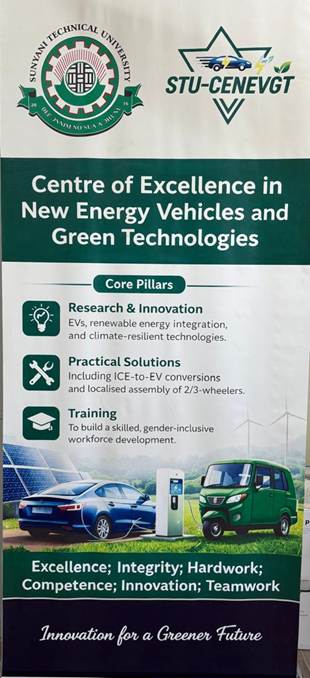
Fig. 6: STU-CENEVGT’s official banner outlines its three core pillars and its commitment to sustainable engineering innovation.
Guided by the values of Excellence, Integrity, Hardwork, Competence, Innovation and Teamwork, the Centre seeks to contribute to Ghana’s growing green technology ecosystem through research, innovation and capacity development.
For Sunyani Technical University, the initiative demonstrates how applied engineering research can address national challenges while creating opportunities for industrial collaboration and technological entrepreneurship.
Under the leadership of Engr. Dr. Samuel Jonas Yeboah, STU-CENEVGT is pursuing a long-term ambition: helping Ghana move beyond being primarily a consumer of electric vehicles towards developing the expertise needed to design, assemble, adapt and sustain its own green mobility technologies.
The Centre’s vision is captured in its guiding motto: “Innovation for a Greener Future.”