
Fake drugs don’t teleport, smugglers move them — Experts
Regulators must tighten borders, share intelligence, track movement
By Chioma Obinna
LAGOS — Pharmaceutical regulators across Africa have been urged to shift greater attention from licensed drug establishments to the movement of medicines across borders, with experts warning that falsified and substandard products are moved through organised networks rather than simply appearing in the market.
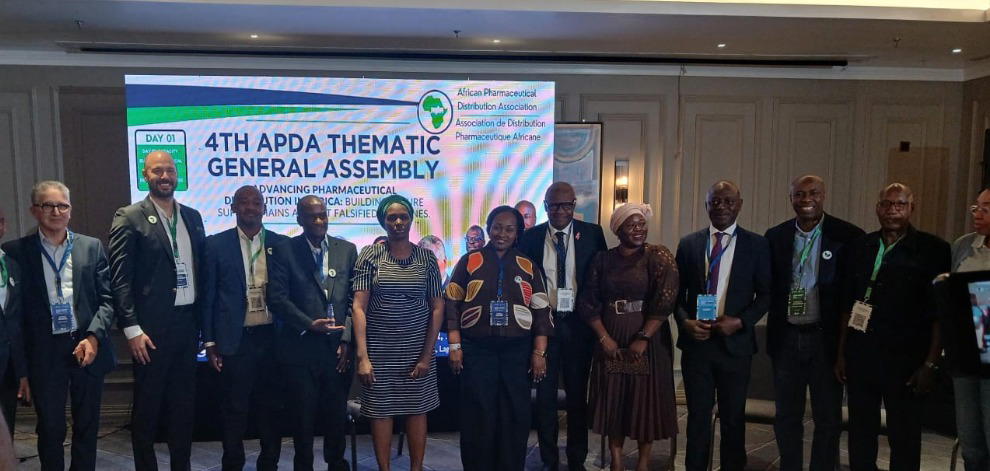
The call was made in Lagos at the 4th Thematic General Assembly of the African Pharmaceutical Distribution Association, APDA, where stakeholders said weaknesses in the pharmaceutical supply chain were creating opportunities for falsified medicines to enter and circulate across African countries.
Speaking at the three-day assembly hosted by the Pharmaceutical Wholesalers and Distributors Association of Nigeria, PWDAN, Wilson Chandomba said regulators had traditionally focused on licensed establishments, while insufficient attention was being paid to the individuals and networks moving pharmaceutical products across borders.
“Falsified products do not teleport into Africa. Somebody’s moving them,” Chandomba said.
He said the movement of pharmaceutical products remained a major weakness in the supply chain that required stronger regulatory attention, intelligence sharing and cross-border cooperation.
According to him, regulators often focus on establishments that manufacture, distribute or sell medicines but may overlook agents involved in moving products from one location to another.
Chandomba called for stronger cross-border controls, intelligence sharing among regulators and collective prequalification mechanisms to prevent falsified medicines from exploiting gaps between countries.
He also stressed the need for greater emergency preparedness and more effective systems for monitoring pharmaceutical products throughout the distribution chain.
The call came as African pharmaceutical distributors, regulators and other stakeholders gathered to examine ways of strengthening medicine distribution and tackling the circulation of falsified and substandard products across the continent.
PWDAN seeks implementation of drug distribution guidelines
Chairman of PWDAN, Ogenochuko Omaruaye, said the association was seeking full implementation of Nigeria’s National Drug Distribution Guidelines as part of efforts to bring greater order to the pharmaceutical distribution system.
Omaruaye said the distribution system remained inadequately structured, creating opportunities for unregulated actors to operate within the medicine supply chain.
He explained that PWDAN was concerned primarily with the distribution of medicines rather than their production, stressing that properly regulated manufacturers and distributors would make it easier to identify those operating outside the approved system.
According to him, government must provide the resources and support required for effective implementation of the guidelines.
He said the gathering was important because distributors from across Africa were confronting similar challenges, particularly the circulation of falsified medicines and weaknesses in supply-chain systems.
Omaruaye urged the government to support self-regulation within the distribution sector while strengthening systems for the distribution of pharmaceutical and other healthcare products.
Distributors are custodians of medicine quality
Also speaking, Pharm. Solomon Shiihii said responsibility for maintaining the quality of medicines did not end when products left manufacturing facilities.
He said wholesalers, distributors and retailers became custodians of medicine quality once products entered the distribution chain, warning that poor storage and handling could affect the potency and quality of medicines.
Shiihii called for continuous training and retraining of personnel in the distribution chain, as well as adequate resources to enable them to maintain proper standards.
Another participant, Pharm. Ernest Okafor, called for stronger collaboration between regulators and other stakeholders, stressing that falsified and adulterated medicines were not confined to individual countries.
He said the cross-border nature of the problem required unified regulatory approaches and joint action among African countries.
Okafor noted that regulations must continue to evolve because criminals involved in falsified medicines were also changing their methods.
He urged regulators to strengthen their systems and remain ahead of emerging methods used to compromise the pharmaceutical supply chain.
AI can strengthen traceability
Dr Yopande Djomo, representing the APDA Central Region in Cameroon, said pharmaceutical distributors across Africa were facing similar challenges, including counterfeit medicines, informal markets and weaknesses in supply-chain security.
Djomo said the conference provided an opportunity for distributors and regulators to exchange experiences and develop practical solutions to common problems.
She identified artificial intelligence and other digital technologies as potential tools for improving efficiency, strengthening traceability and helping to detect falsified and substandard medicines.
According to her, porous borders and informal medicine markets remained common challenges across countries including Nigeria, Cameroon, Congo and Gabon.
She called on governments and regulators to strengthen border controls and work more closely with pharmaceutical stakeholders to secure the medicine supply chain.
The 4th APDA Thematic General Assembly, which ends on October 8, is focused on strengthening pharmaceutical distribution and building more secure supply chains against falsified medicines.