
Doctors must think business plans, not visa applications — Funmi Adeniyi
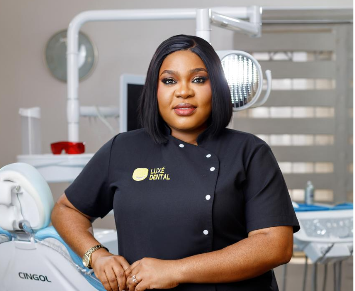
By Chioma Obinna
Nigeria’s healthcare crisis is often framed around what the country lacks:, inadequate infrastructure, equipment, financing and specialist capacity. But Dr Funmi Adeniyi, founder and clinical director of Luxe Dental, wants the conversation to move beyond the deficits.
Ahead of the inaugural Business of Health Conference in Lagos, Adeniyi argues that Nigeria’s healthcare challenges also represent significant opportunities for doctors, investors and other healthcare professionals willing to build sustainable businesses around the needs of the country’s growing market.
For her, reversing medical tourism is not simply about persuading Nigerians to stop seeking treatment abroad. It is about creating healthcare systems good enough to make patients choose to stay, while giving doctors compelling reasons to build their careers and businesses at home.
In this interview, Adeniyi explains why she believes Nigeria already has the demand and talent needed to develop internationally competitive healthcare centres, the specialties she sees as having the greatest potential, and why ownership, investment and technology must become central to efforts to stem the exodus of medical professionals.
She also shares lessons from building Luxe Dental, outlines what she expects from government, investors and healthcare institutions, and reveals the practical indicators she will use to determine whether Business of Health 2026 has translated from conference discussions into actual healthcare ventures, jobs and patients treated in Nigeria.
Why is reversing medical tourism the central theme of the conference, and what specific change do you want the conference to trigger in Nigeria’s healthcare sector?
It is the most honest way to describe what is actually happening. Every year, Nigerians spend enormous sums travelling abroad for care that, in many cases, could be delivered here if the right infrastructure existed. That is not a statistic to feel bad about. It is a market signal. It tells us exactly where the gaps are and exactly what needs to be built.
I did not want a conference about what is missing in Nigerian healthcare. We have had that conversation for decades.
I wanted a conference that asks a different, sharper question: What can we build, starting now, to bring that spending and that trust back home?
The change I want to trigger is simple. I want the doctor sitting in the audience to leave thinking about a business plan, not a visa application.
We are losing our brightest minds after investing in quality medical training largely because they see no opportunities and no ability to make a good living while here. We want to spotlight what is possible here and now.
What market realities convinced you that Nigeria can become a destination for high-quality healthcare?
I did not arrive at this from a report. I arrived at it from building Luxe Dental.
We started small and grew in Lagos, without external capital, receiving hundreds of clients from the diaspora every quarter. That proved that a Nigerian-run, Nigerian-owned healthcare brand can meet a standard patients trust enough to pay for repeatedly, without needing to leave the country.
If that is possible in dentistry, it is possible in cardiology, oncology, fertility care and diagnostics. The demand already exists.
Nigerians are not choosing foreign hospitals because they distrust Nigerian doctors. They are choosing them because the infrastructure, the equipment and, in some cases, the confidence have not caught up to the talent we already have at home.
Which medical services do you believe Nigeria is best positioned to develop into internationally competitive centres of excellence first, and why?
Dentistry and aesthetic care are an obvious starting point because we have already shown it can be done.
Beyond that, I would point to oncology, cardiology, dermatology, orthopaedic surgery and fertility care. These are exactly the specialties driving the highest volume of medical travel out of Nigeria today, which means the demand, and the willingness to pay for quality, is already proven.
We do not need to create a market. We need to build the capacity to serve the one that already exists.
Diagnostics deserves particular attention too. A country cannot build centres of excellence in treatment without first building reliable, world-class diagnostic infrastructure underneath them.
What are the biggest obstacles preventing Nigerians from choosing local care today?
Honestly, trust, quality standards, specialist availability, equipment, financing, patient experience and infrastructure. But they are not equal in weight.
Financing and infrastructure sit underneath the rest. Without capital, clinics cannot acquire the equipment that builds trust, cannot retain the specialists who deliver quality, and cannot design the patient experience that competes with what is offered abroad.
Trust is often described as the root problem, but I would push back on that. Trust is a downstream effect. Patients trust systems that consistently deliver good outcomes.
Our job is not to convince people to trust Nigerian healthcare. Our job is to build healthcare worth trusting, and the trust will follow the evidence.
What commitments are you seeking from investors, government, healthcare institutions and private-sector leaders after the conference?
From investors, I am seeking capital that treats healthcare as the commercially viable asset class it is, not a charitable cause.
From the government, I am seeking a policy that makes it easier, not harder, to import equipment, register innovative care models and retain trained professionals, alongside the infrastructure only the government can provide at scale, such as reliable power and consistent regulation.
From healthcare institutions and private-sector leaders, I am seeking collaboration over competition.
No single hospital or clinic can reverse medical tourism alone. This requires shared standards, referral networks between Nigerian specialists and a collective decision that we are building one ecosystem, not a set of isolated practices.
How will this conference address the challenge of retaining skilled healthcare professionals while also encouraging doctors, dentists, nurses and other clinicians to become healthcare entrepreneurs and builders?
Retention has failed as a strategy on its own because it asks people to stay for less than what they could have elsewhere. That is not a compelling offer.
What we are proposing instead is ownership. A clinician who owns equity in a growing clinic, a diagnostic centre or a health-tech platform has a very different relationship with this country than one who is simply an employee waiting for the next opportunity abroad.
The conference is structured to make that shift tangible, not aspirational. It sits alongside a Clinical CEO Masterclass that gives clinicians the actual business skills, financial literacy and operational tools to move from practitioner to builder.
We are not just telling people to stay. We are showing them, with real numbers, what staying and building can be worth.
How can health technology help Nigeria expand access to quality care?
Technology is how we solve the distribution problem without waiting decades to build a hospital in every local government.
Through the Smile Doctor Foundation’s mobile dentistry work, I have seen directly how a tablet, a trained health worker and a connected specialist can bring quality screening to communities that have never had reliable access to oral healthcare.
That same model scales across specialties. Digital consultations, AI-assisted diagnostics and remote monitoring will not replace hospitals, but they will extend the reach of the specialists we already have far beyond the cities where they currently practice.
For a country this size, technology is not optional. It is the only realistic way to close the access gap within a reasonable timeframe.
What practical measures will you use to judge whether the conference has made an impact one year later?
The number of attendees who leave and simply feel inspired is not a metric I care about.
What I will be watching for is concrete: how many delegates have started, funded or formally structured a healthcare venture in the 12 months after the conference? How many investment conversations that began in that room converted into actual capital deployed into Nigerian healthcare businesses?
I will also be watching institutional signals, such as whether hospitals and clinics represented at the conference begin collaborating on shared standards or referral pathways.
If, a year from now, we can point to specific businesses, specific jobs and specific patients treated at home instead of abroad, then the conference will have done its job.
For a Nigerian family considering travelling abroad for treatment, what would have to change, visibly and credibly, for them to feel confident receiving that care at home?
They would need to see outcomes, not promises.
Published success rates, visible investment in modern equipment, and specialists whose training and results are transparent and verifiable.
Families do not choose a hospital because of patriotism. They choose it because they trust it will get the outcome right, and that trust has to be earned with evidence, not asked for with appeals to national pride.
They would also need to see other Nigerian families making that same choice and being satisfied with it. Confidence spreads by example.
Every family that chooses to stay and receives excellent care at home becomes part of the proof that makes the next family’s decision easier.
That is exactly the kind of visible, credible proof Business of Health 2026 is built to accelerate. Build here. Build now. Build big.