
Fee-paying STEM admissions threaten Ghana’s quest for STEM-driven economy – Kofi Asare

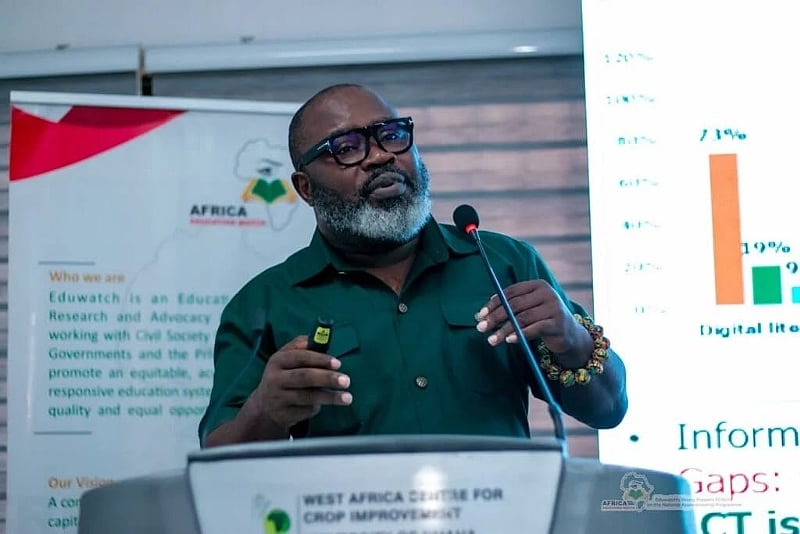
The Executive Director of Africa Education Watch (EduWatch), Kofi Asare, has raised concerns over the growing reliance on fee-paying admissions in Ghana’s tertiary institutions, particularly for Science, Technology, Engineering and Mathematics (STEM) programmes.
He said the practice may make access to critical STEM education increasingly dependent on students’ ability to pay.
According to him, the trend could undermine efforts to build a STEM-driven economy and create future shortages of skilled professionals in critical sectors.
“The growing reliance on fee-paying admissions in our tertiary institutions, particularly in STEM programmes, as a means of raising IGF deserves serious attention,” the education advocate wrote in a social media post on Tuesday, September 22.
He cited Medicine as an example, claiming that in some universities, as many as 99% of students enrolled in the programme are fee-paying.
The EduWatch boss questioned whether students who make significant personal financial investments in their training would be willing to accept postings to underserved communities after graduation, particularly when their education has effectively been treated as a commodity.
“How do you expect someone with an aggregate 6 to study medicine as a fee-paying for many years, and then willingly choose to serve in Sirigu, when the system commodified their training?” he asked.
He cautioned that if the issue is not addressed, Ghana could fall short of its targets for shifting the balance of tertiary enrolment towards STEM and increasing overall tertiary participation.
He further cautioned that the country could eventually be forced to rely on foreign-trained professionals to fill gaps in its STEM workforce.
Mr Asare therefore called on the government to provide adequate funding to universities to reduce their dependence on internally generated funds (IGF), particularly for recurrent expenditure outside salaries.
“The government must fund the universities well in order to end this disturbing culture of non-salary recurrent self-financing,” he said.