
“Night Nurse” sexualizes the scam call
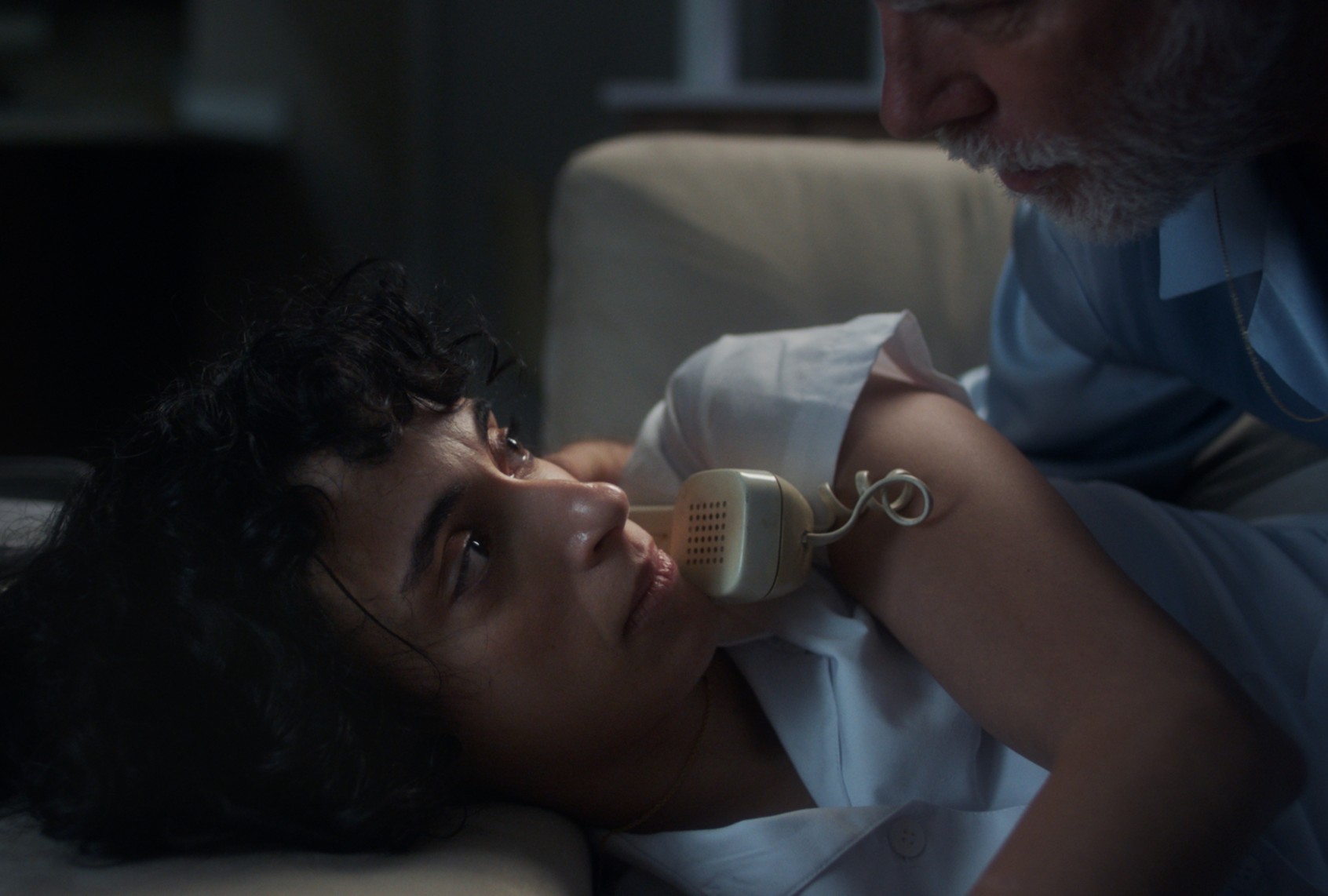
In Georgia Bernstein’s alluringly listless “Night Nurse,” something is afoot at a luxury retirement community. Residents have been receiving troubling calls from people pretending to be their grandchildren, swindling them out of thousands of dollars. But in Bernstein’s film, the classic grandparent scam mutates into something more sinister, twisting the viewer in its senile sleaze with all the nonchalance of a lovestruck teenager, wrapping a telephone cord around their finger, talking until the sky turns black.
“Night Nurse” is as flirty and fleeting as a high school crush — intense enough to make an impact but staked more on possibility than actual sensation. When the facility’s newest nurse, Eleni (Cemre Paksoy), is tasked with caring for a difficult resident, Douglas (Bruce McKenzie), she finds her duties upended and reversed by Douglas’ persuasive charm, indulging in the sick comforts of his attention. The two forge a deal: She’ll pose as the helpless grandchild, while he sexualizes the thrill of their calls.
Bernstein is reluctant to pathologize either of her twisted subjects. “Night Nurse” is more about the microcosm of this sleepy retirement community — where money and power still have influence, despite their stasis — than it is the outcome of Eleni and Douglas’ affair. The film is a mood piece, albeit a fascinating one.
But in the era of AI-faked voices and persistent scammers, “Night Nurse” has a timely edge. Bernstein examines how easy it is to be swept away by an environment where consequences don’t seem real. And thanks to her hypnotic direction and Paksoy’s unpredictable performance, “Night Nurse” gives an old idea strange new youth.
Read more
about atypical tales of aging