
Why the media lets Republicans keep medical woes a mystery
Here we go again with the extraordinary, taxpayer-funded disappearing acts of Republican politicians.
A headline in the Louisville Courier-Journal crystalized the state of affairs on Capitol Hill: “As Tom Kean returns, Mitch McConnell‘s absence now DC’s biggest mystery.” Reporter Lucas Aulbach noted that the 84-year-old former Senate majority leader has missed more than 20 votes since mid-June after being hospitalized for unspecified reasons. As rumors about his condition continue to fly online, McConnell’s office has offered scant information since.
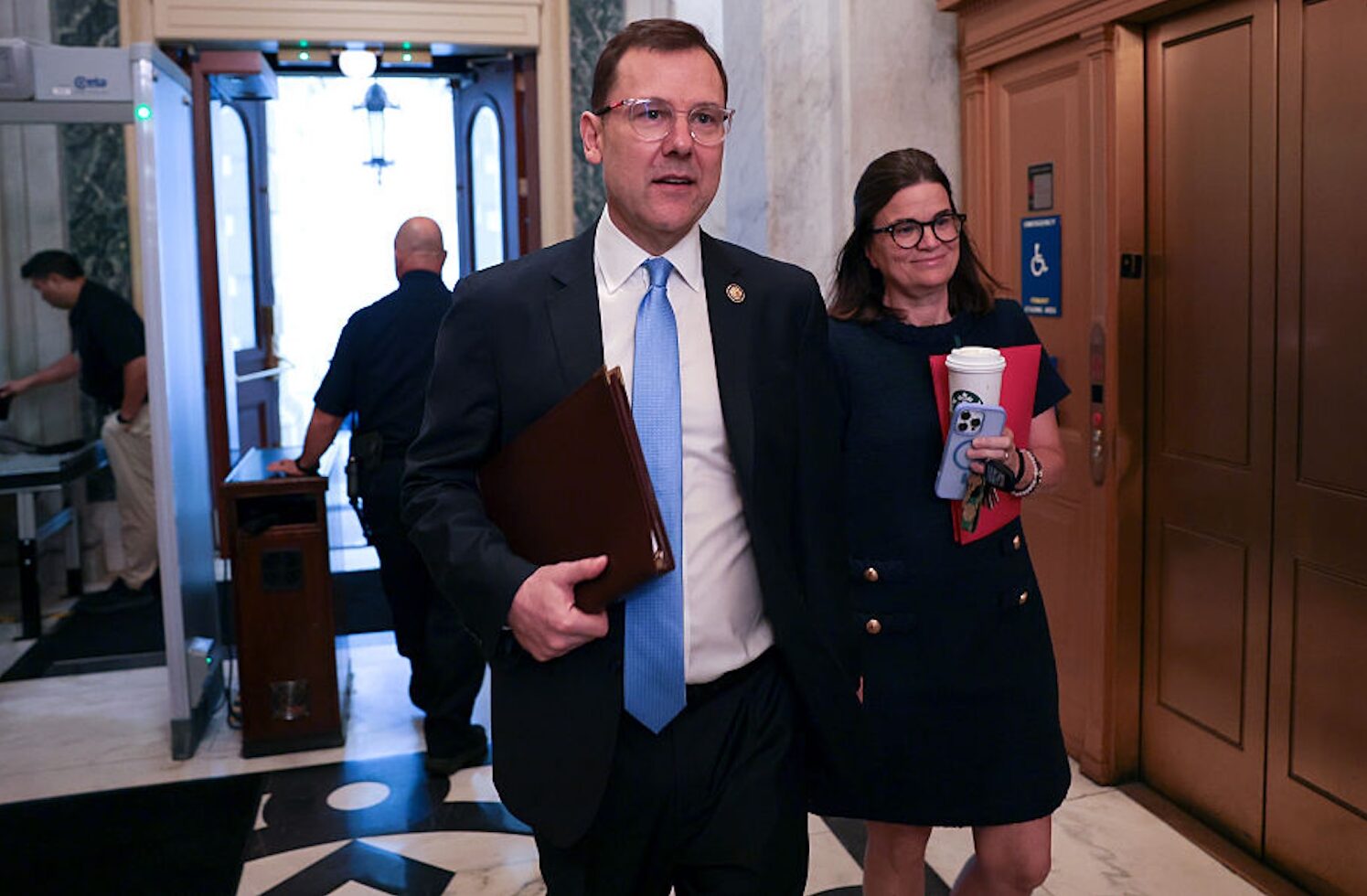
Then there is Rep. Tom Kean Jr. of New Jersey, who simply disappeared for four months. The 57-year-old New Jersey Republican last cast a vote in the House on March 5 before vanishing from Washington, D.C., and his home district for over 100 days. For months, his staff offered only the vaguest references to a medical issue, stonewalling reporters and leaving the voters of New Jersey’s seventh congressional district completely unrepresented. The absence was so mysterious that even some of his staff reportedly did not know the specifics, only that he was “under a doctor’s care.” Yet Kean also managed, during this period, to raise campaign funds and reportedly trade stocks. The moment he returned to Capitol Hill, his schedule featured five separate high-dollar fundraising events, including one booked for the very day of his return.
When Kean finally reappeared on the House floor this week, he made an emotional, candid speech acknowledging his depression, which many outlets rightly praised as an important step toward destigmatizing mental illness. But following his return, much of the coverage of Kean’s absence has been framed as a personal journey instead of a dereliction of duty for which his constituents received no timely explanation.
This is not about gawking at illness or punishing people for seeking care. Everyone is entitled to privacy about their bodies, and no one should be shamed for poor health. It is a genuinely good thing that elected officials can speak openly about mental health challenges and get treatment without stigma.
But we should acknowledge there is a separate reality for most Americans: The idea of disappearing from work for months with no explanation, collecting a paycheck, retaining full benefits and continuing to manage investments is laughable.
But we should acknowledge there is a separate reality for most Americans: The idea of disappearing from work for months with no explanation, collecting a paycheck, retaining full benefits and continuing to manage investments is laughable. Even one of Kean’s GOP colleagues, Rep. Lauren Boebert of Colorado, criticized him for his “unacceptable” behavior. Yet in Washington, the political press has largely framed this as a sympathetic comeback story instead of evidence of a structural scandal.
As Mother Jones documented, Kean has spent much of his legislative career voting against policies that would make it easier for ordinary people to take time off work and seek medical care. During his two decades in the New Jersey Senate, Kean consistently stood as a roadblock against basic workplace dignity. He voted against paid parental and family leave laws in both 2008 and 2018. He twice voted against paid sick leave for his constituents, actively opposing the historic Earned Sick Leave Act, which mandated a meager five days of paid sick leave per year for New Jersey workers. He voted against the state’s No Surprise Medical Bills Act, choosing to protect the profit margins of private healthcare networks over constituents facing bankruptcy. He supported work requirements for Medicaid and other programs that treat human beings as “able-bodied adults” whose brains apparently don’t count as part of the body — unless they’re sitting in a House seat. When it came to his own depression, Kean had the very support he has refused to extend to others: employer-paid leave, top-notch insurance and the ability to vanish from work for months without losing his job.
Physical presence is a hotly debated topic on Capitol Hill. But cognitive capacity is essential to governance — and updates on functional capacity are a legitimate part of democratic transparency. Unexplained gaps in representation are inherently newsworthy.
McConnell, for example, has a history of public episodes — freezing mid-sentence, apparent cognitive lapses — that the press reports on in the moment and then allows to fade into the background. Donald Trump’s first term was marked by mysterious hospital visits and opaque explanations about his physical condition, including rushed trips to Walter Reed that never received a full account. When he contracted Covid-19 in 2020, his condition was wrapped in disinformation. Now, at 80-years-old in his second term, he remains largely insulated from sustained scrutiny about his health.
Contrast this with the mainstream media’s coverage of Democrats’ health. Pennsylvania Sen. John Fetterman’s hospitalization for clinical depression in 2023 was disclosed relatively early and covered extensively, with a focus on transparency and recovery. Dianne Feinstein’s final years in office involved repeated reporting on cognitive decline and absences, raising difficult questions about when coverage becomes invasive or speculative. President Joe Biden’s age and health were subject to sustained — and continued — scrutiny, including by this publication.
Start your day with essential news from Salon.
Sign up for our free morning newsletter, Crash Course.
I am certainly not arguing that reporters should have looked away from Biden’s decline. The point is that the same reporters, the same outlets, the same “does he have what it takes” energy evaporates the moment the subject is a Republican leader who has quite literally vanished from public view for months at a time. Trump’s most recent physical, for example, involved 22 medical specialists — the highest number publicly disclosed for a presidential checkup in modern records — and yet the White House has declined to identify them or explain why so many were needed. The administration has not released a full medical summary from his doctor, and it took two months for the public to even learn that an October scan was a CT scan. Outside physicians reviewing his publicly visible symptoms — bruised hands, leg swelling, recurring skin redness and episodes of daytime drowsiness — have said the administration’s cosmetic explanations are incomplete without supporting data, and House Judiciary Democrats have formally demanded answers about what they called an “eye-popping” medical team assembled to pronounce a supposedly healthy man fit for office.
The media’s compliance in this hypocrisy was put on stark display when Mike Johnson stepped up to the podium this week to shield Kean from accountability. The House speaker told reporters it was a “really unfair question” to ask whether Kean’s prolonged, uncommunicated absence should impact his bid for re-election in his highly competitive swing district. Johnson claimed that Kean had addressed the matter “appropriately” and bragged about texting the Republican to tell him, “We’re in your corner and we’re behind you 100%.”
Reporters should have asked Johnson whether he believes the human brain is a part of the body, and whether an individual suffering from severe clinical depression qualifies as an “able-bodied adult” under the GOP’s punitive Medicaid guidelines. They should have asked why New Jersey taxpayers should fund a four-month, mid-session medical sabbatical for a politician who has repeatedly voted to ensure those same taxpayers are fired if they try to do the same.
One of the core tensions here is that journalism does not actually have a formal threshold for “incapacity.” There is no agreed-upon rule for how many missed votes constitute newsworthy absence, how long a hospitalization must last before disclosure is expected or what level of detail is appropriate when an official cites a medical condition without elaboration. Journalists are expected to avoid publishing diagnoses without confirmation and to avoid speculation that could mislead audiences. The Society of Professional Journalists’ ethics code emphasizes minimizing harm while also acting in the public interest and holding power accountable. The question becomes more prominent when it intersects with governance questions like a closely divided vote or succession concerns. In the case of McConnell, his absence is not just a personal matter; it has implications for Senate leadership dynamics.
This is why Congress should pass legislation requiring federal elected officials to disclose when a serious medical condition prevents them from carrying out their responsibilities and to provide periodic status updates to their constituents. Such legislation would not solve every problem, but it would create a baseline.
Meanwhile, the media must change its posture. The deference shown to Republican officials with unexplained health issues is a choice.
Read more
from Sophia Tesfaye