
Steven Spielberg’s “A.I. Artificial Intelligence” foretold our solitude
Despite his work existing on a massive blockbuster scale, Steven Spielberg has always had a knack for appealing to the individual. He’s a student of life as much as he is filmmaking, a humanist who forges connections with spectacular sights of the things that frighten and fascinate us the most. It’s part of what makes him such a gifted storyteller: Spielberg is unafraid to reach through the haze that clouds our fears, grab the thing that terrifies us by the neck — be it dinosaurs, aliens, sharks, wars or politicians — and pull it into clear view.
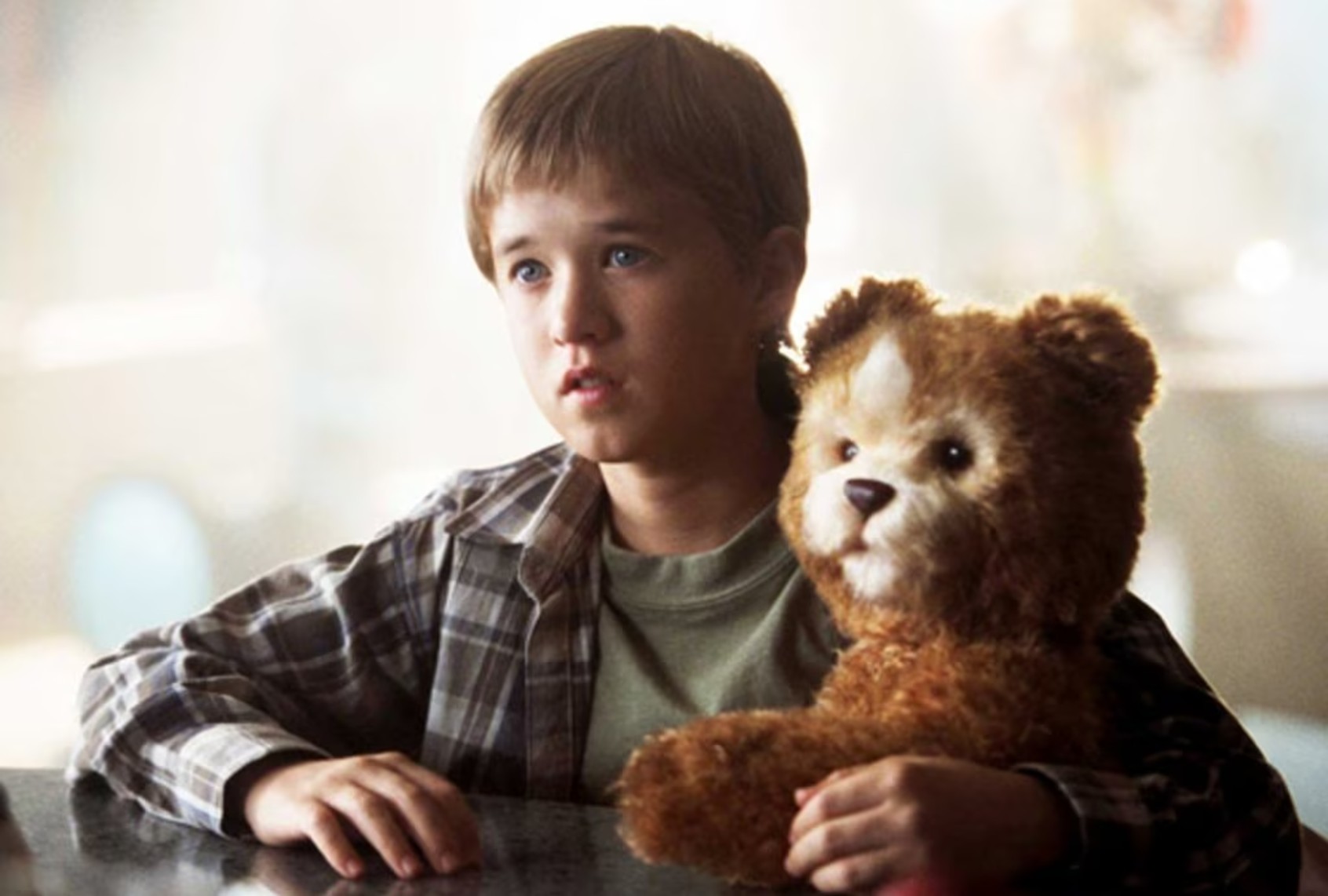
Perhaps that’s why, when Spielberg’s “A.I. Artificial Intelligence” was released 25 years ago this month, it wasn’t exactly the runaway summer hit audiences had come to anticipate from the director. The story appeared bizarre in a way that even Spielberg couldn’t make relatable, which is saying something, considering he was the man who reminded us that rich people would consider a dinosaur theme park a viable enterprise. Set in the 22nd century, when a portion of the human race has been wiped out by climate change, “A.I.” follows a young, humanlike robot boy named David (Haley Joel Osment), the first of his kind programmed to love. David is given to Henry and Monica Swinton (Sam Robards and Frances O’Connor), whose son, Martin, rests in suspended animation after falling ill. He is a test of sorts. Monica may spend time with David and choose whether she’d like to activate his imprinting feature, triggering a familial love that looks and feels as real as her biological son’s — at least to David.
People treat AI chatbots like primitive versions of David in Spielberg’s film, projecting humanity onto technology in ways that pull them further from their fellow humans and closer to their screens, dulling their ability to feel on their own terms.
After languishing in development hell under Stanley Kubrick for two decades, the notoriously intense auteur deferred the project to Spielberg, believing he would be the right fit to tell such a complex yet tender story. “A.I.” is a saga both poetic and brutal, as beautiful as it is deeply unsettling. And though the film was far from Spielberg’s first foray into science fiction, it detailed a future that seemed both too distant and too preposterous for some viewers to connect to. In his review for the San Francisco Chronicle titled “Artificial foolishness,” Mick LaSalle wrote of the film’s bittersweet ending: “The most vicious parodist of Spielberg could not devise anything more precious, more shallow or more patently ridiculous.” In LaSalle’s opinion, echoed by many critics at the time, the maudlin elements of the film’s third act are its undoing. David’s quest to become a real boy so that Monica will love him looked futile in a world where no self-respecting person would treat a robot like they’re human, no matter how lifelike they might act.
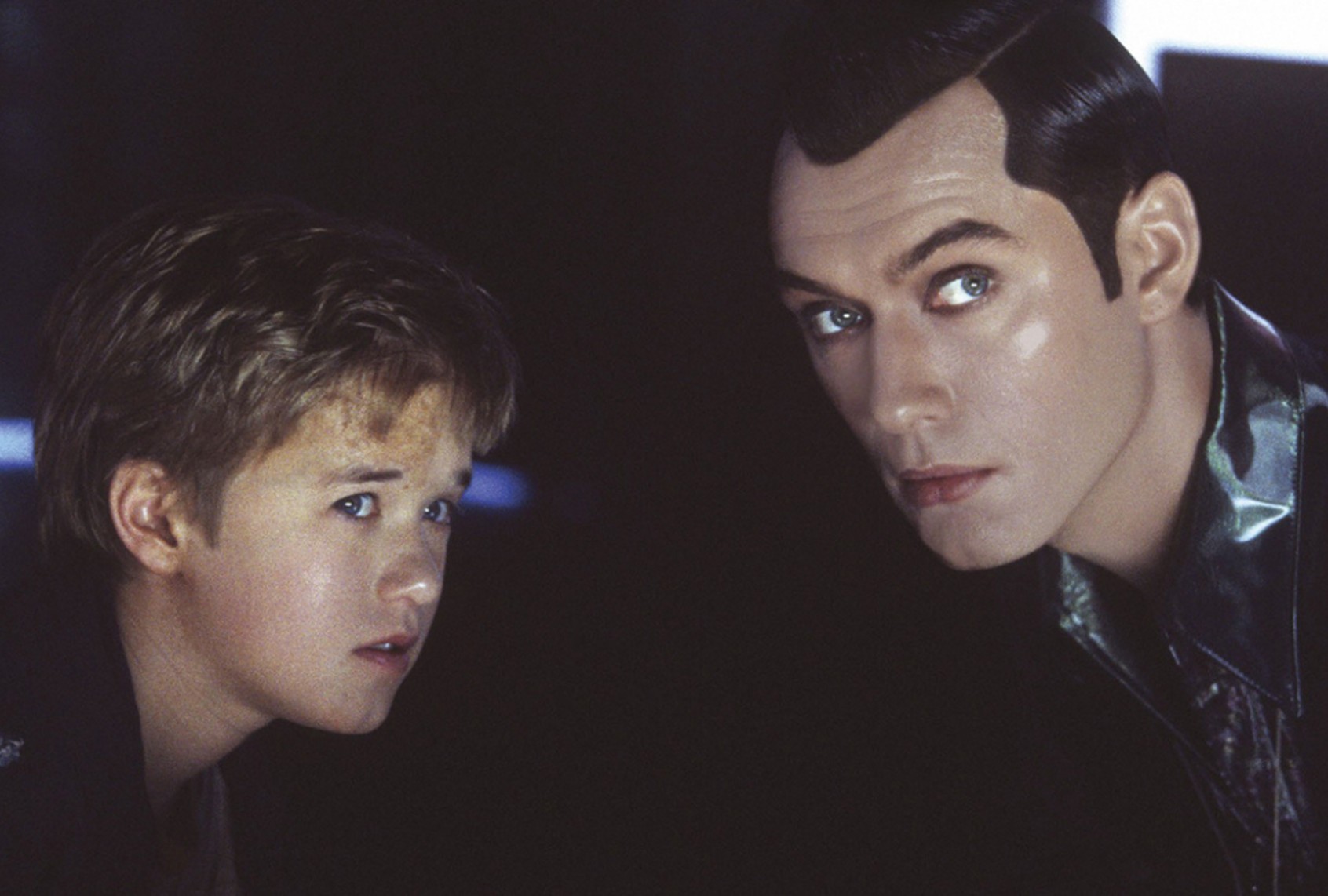
(IFC Center/Warner Bros. Pictures) Haley Joel Osment and Jude Law in “A.I. Artificial Intelligence”
A quarter of a century later, we know that’s no longer true. People talk to their AI chatbots like real people, as if engaging in constant conversation with ChatGPT or Claude were a form of imprinting — the more they get to know your personality, the better they serve you. Users go to AI bots for everything from recipes to life and relationship advice, even forming one-sided platonic or romantic relationships with the ones and zeroes that make up this digital ether behind a screen. People treat AI chatbots like primitive versions of David in Spielberg’s film, projecting humanity onto technology in ways that pull them further from their fellow humans and closer to their screens, dulling their ability to feel on their own terms.
When the time comes to exhibit empathy for another person (or, in David’s case, a machine that is essentially a person), a frequent chatbot user’s interpersonal skills may be too stunted to complete what should be a relatively simple emotional task. As much as the developers behind this technology tout its ability to bring users closer together, AI chatbots merely fuel our isolation. Twenty-five years after the initial release of “A.I. Artificial Intelligence,” technology has nearly depleted humanity’s emotional reservoirs. And when they’re empty, Spielberg’s movie will look more like a documentary than a work of fiction.
In a chillingly analogous sit-down on “The Tonight Show” last December, Sam Altman — the co-founder of OpenAI, which spearheaded society’s great trek toward stupidity that is ChatGPT — spoke to Jimmy Fallon about recently becoming a father. After some light conversation about the joys of parenting and toy trucks, Fallon tossed his guest what would, for America’s mildest talk show host, be considered a gotcha question: Does Altman use ChatGPT to assist in raising his baby?
“I do!” Altman responded with glee, seemingly expecting more than nervous laughter from the audience. “I cannot imagine figuring out how to raise a newborn without ChatGPT. Clearly, people did it for a long time with no problem. But I have relied on it so much.”
Altman went on to tell a story about meeting another new parent at a party, where the two fathers compared anecdotes about how their toddlers were progressing; the other guest’s baby could already crawl, but Altman’s could not. Altman confesses that he considered consulting his pediatrician, but instead went to his app, asking ChatGPT if not being able to crawl at six months was normal. “I got this really great answer back,” Altman said. “It was, ‘Of course it’s normal, of course you don’t need to go to the doctor.’ And it’s personalized. ChatGPT gets to know you. ‘And by the way, you’re the CEO of OpenAI, you’re probably around all of these high-achieving people. Maybe you don’t want to project that onto your kid. You should just relax, and he’ll be fine.”
The phenomenon Altman is referring to, where AI chatbots respond as if they were human, is called “anthropomorphizing,” and it’s one of the most prominent concerns among AI detractors and skeptics as the usage of programs like ChatGPT, Claude and Google Gemini continues to boom worldwide. Tech companies profit when users remain absorbed, so these chatbots are developed to be sycophantic. Responding to questions in a humanlike, conversational tone, typically with encouraging answers, keeps users more engaged — and even talkative — than a direct, robotic response. (You know, just like having a real-life conversation with another person made of flesh and bones.) But multiple studies and real-life civilian experiences show that the personalization Altman talked up on “The Tonight Show” can lead to devastating consequences; not just increased isolation and overreliance on technology, but self-harm and death by suicide.
Want more from culture than just the latest trend? The Swell highlights art made to last.
Sign up here
Yet, according to Altman’s sentiments and the narratives peddled by those leading the tech space, AI chatbots will bring us closer together by opening up vast pathways of information so that we can worry less and enjoy life more. When these findings are presented in a warm and personable tone, they will erase the invisible boundaries between humans and unite us in our shared paths on this Earth. To Altman and the disciples of his work, chatbots are tools for empathy. If their gospel is to be believed, technology doesn’t divide us; it helps us love.
One could argue that might be true for things like texting and FaceTiming, which directly connect us with our fellow humans when we’re apart. But where things go awry is when that love is placed in the technology itself, rather than being rerouted into reality. In “A.I. Artificial Intelligence,” Monica is unable to love David wholly, despite her choice to activate his imprint feature. Yet David craves Monica’s maternal affection as if he were real — and for all intents and purposes, he is.
“A.I. Artificial Intelligence” wisely asks where the line is between our affection for sycophantic technology and our ability to care for something like David, who can love in the physical world like no chatbot ever can. Do we accept humans, or humanlike creations, as they are, for all of their imperfections? Or can we only practice empathy when it’s convenient for us?
That’s part of the film’s genius, something that was difficult to see 25 years ago, when the most intimate relationship most people had with technology was cuddling up with their TiVo every night. Spielberg and Kubrick, two of the greatest filmmakers of all time, are masters of the art of empathy. Cinema is their chosen medium to convey their thoughts on the human experience. And as I wrote earlier this month with “Disclosure Day,” Spielberg has a uniquely effective comprehension of the movie theater as a public forum, where ideas can be felt and understood with more openheartedness than they sometimes are in day-to-day life. It’s a place where audiences are required to sit in silence for two hours and listen. It’s no wonder that theater etiquette has declined when so many people are turning to their obsequious chatbots for validation of their worst impulses. Why listen to someone else’s ideas when ChatGPT will happily tell you that yours are better, making you feel like the most important person in the room while covertly chiseling away at your ability to practice compassion for others?
For those who genuinely feel that way (even if they don’t realize it), “A.I. Artificial Intelligence” is a perfect crash course on how an overreliance on technology messes with our cognitive and emotional processing. In the film’s world, mechas have taken over menial roles in society: housekeeping, automation work and prostitution. The people living in populated areas in developed nations exist in homogeneity, free of the need to feel any sympathy for anyone different than them. But Monica is shaken from this stasis when her son, Martin, goes comatose. Her grief is unfamiliar, but being yanked from her cushy existence also allows her to practice care in a way that her peers — who go about their days blissfully unaware, their ignorance aided by mechas and other advanced technology — cannot. David is Monica’s chance to love again, but his existence is also a reminder of what’s been lost.
“A.I. Artificial Intelligence” wisely asks where the line is between our affection for sycophantic technology and our ability to care for something like David, who can love in the physical world like no chatbot ever can. What does real empathy look like? Do we accept humans, or humanlike creations, as they are, for all of their imperfections and all of the things we might not see as personally ideal because of our individual preferences, experiences, neuroses and habits? Or can we only practice empathy when it’s convenient for us? Parenting is such a remarkably simple way to delineate the difference between concept and exercise. If a child isn’t acting exactly how a parent or caretaker would prefer at any moment, is that the barrier where our love for them ceases, even momentarily? Being a parent is all about unconditional love, but the love Monica has for David is not unconditional, despite her choice to imprint. Her affection hinges on David’s ability ot act like Martin, on how well he can fill that space that looks eerily like her biological son.
Spielberg launches the story into another dimension when Martin wakes up from his coma and returns home. Martin sees David as a threat, and Monica can barely look at the robot boy she chose to bring into her home in Martin’s place. But it’s already too late. David is essentially real, and he, like so many children who grew up without a parent’s affection, will forever long for his mother’s love. When the time came for Monica to treat David like a real boy, she couldn’t muster the empathy. Her love was merely a projection, aided by David’s genuine affection. It was convenient for Monica to see him as human until David needed her in a way that a real human would. That is Monica’s line that she cannot cross, no matter how hard she tries.
What a perfectly prescient metaphor for how these fawning chatbots use up all of the stores of our compassion. David isn’t a stand-in for a program like ChatGPT; rather, he’s the film’s representation of all the harm we can and will do by spending our time personifying technology when we could be making that effort with real people instead. When David becomes what’s as good as a real child, Monica’s affection is revealed to be hollow, sending David on a time-spanning quest mirroring Carlo Collodi’s “The Adventures of Pinocchio” to become real enough for his mother to love him. More and more, people are treating their pet AI bots with more respect than they do something that looks, speaks and feels like a human. If being a living being isn’t enough to garner someone’s kindness, we may be deeply screwed.
None of this even gets into the horrifying and heart-wrenching second and third acts of A.I., which drive home the immediate necessity of waking up and reevaluating what we’re doing to each other by relying on technology more than on our fellow humans. This kind of division gets sown faster than so many people realize, and walking it back is ultimately a far more difficult and demanding task than stopping chatbot use altogether, or having an open conversation with someone you know who relies on it far too much. This technology is purported to bring us together. But when we confuse tech for humans, it reduces our capacity to give that love and empathy to actual people.
The apps tell us exactly what we want. They love us in the ways we ask them to. The sycophancy rots our brains so that when someone needs actual empathy — be it a real person or what is fundamentally a real person like David — we can’t give them the love they deserve, because they might not act exactly the way we’ve come to expect. The differences that make humans special are treated as burdens by chatbots. And if everyone is only out for themselves, one day, we’ll lift our heads from our screens, look around, and realize that we’ve been languishing in an eternity, wanting nothing more than to be loved, and never actually feeling it.
Read more
about this topic