
I’ve never addressed Tinubu as drug lord – Bwala
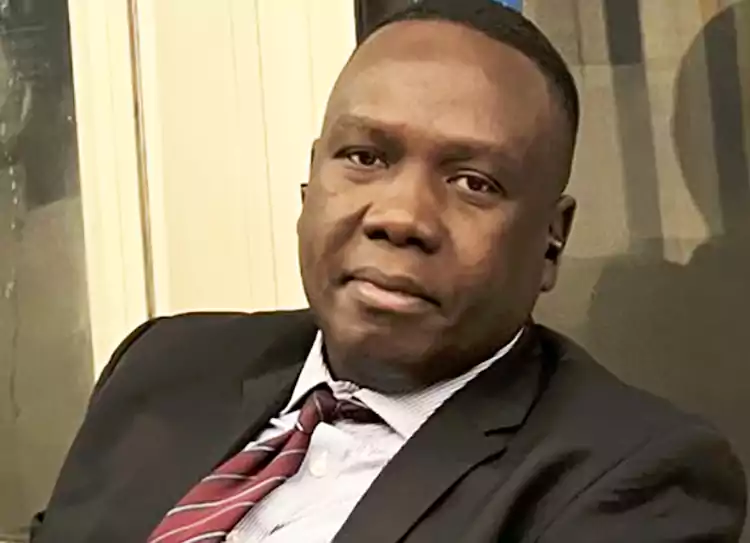
The Special Adviser to the President on Policy Communication and Media, Daniel Bwala, has refuted claims that he once referred to Bola Tinubu as a drug lord, insisting the allegation stemmed from misrepresentation on social media later echoed by traditional media without proper checks.
Bwala, who previously served as spokesperson for Atiku Abubakar during the 2023 presidential campaign before joining Tinubu’s government, made the clarification during an interview on News Central on Monday. He challenged interviewers to provide any video evidence supporting the claim.
“I have never in my life addressed Bola Tinubu as a drug lord. In fact, I have never believed in it,” he said.
“If you have it here, we can shut the interview and you produce it,” he added.
The presidential aide also addressed another widely circulated claim suggesting he had said even 30 years in office would not make a difference under Tinubu’s leadership. He traced the statement to a misinterpretation of remarks he made during a Channels Television interview on December 25, 2023, where he said he was analysing government policy, not the president’s tenure.
According to Bwala, his original statement was focused on policy effectiveness, not leadership duration.
“I said, where a policy is fundamentally flawed, that 30 years will not correct it,” he said, adding that the remarks were stripped of context before spreading across social media and into print.
He noted that he possessed video evidence of the original interview and offered to play it during the programme.
Bwala used the controversy to criticise what he described as a growing pattern in Nigerian journalism, where unverified social media narratives are treated as factual reports.
“Now, when you mentioned it was reported in the paper, that is the second question that the Nigerian media should begin to look at, how social media now set the tone and agenda for mainstream media. And this is where we have the problem in Nigeria today.
“Believe me, I’m telling you, I see some television houses, not all of them, where they report stories on social media that were unverified, as though it is verified information and people run to town with it,” he said.
Bwala stressed that professional journalism requires verifying claims at their source, drawing a comparison with academic research standards, where referencing without consulting original material is considered inadequate.
“If, for example, assuming you’re running a newspaper, and you see a social media that says something like that, for the purposes of verifying your information, which is part of the ethics, we need to say, let me go to the source. Now, as a researcher, I will tell you the discipline in research. It is not enough that you are citing a reference, or that you come across a reference.
“It’s important you go to the source of the book that was referenced. So you can get the context of the author, and where necessary, to also stretch it further and see peer review, what was the opinion of others regarding that point that was highlighted, so that when you say something, it will be cast in stone.
“But I can understand that journalism now has taken a different dimension, that very good journalists, their good work is being overshadowed by the conduct of very few minority who have mastered the nuances of social media that feeds off of vitriol and hate for the monetisation of revenue,” he said.