
SCOTUS set to deal major blow to mail voting ahead of midterms
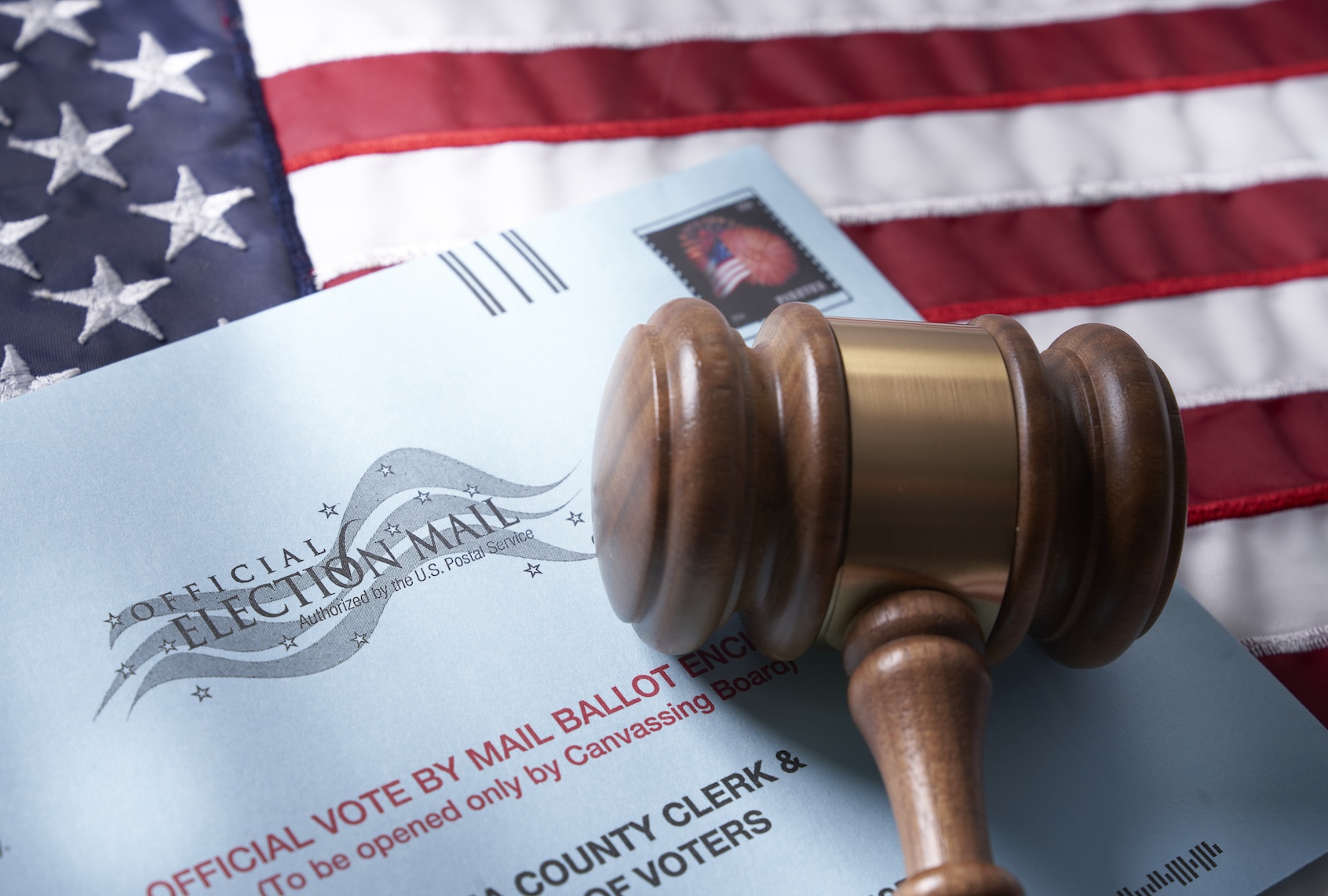
In the 2024 election, nearly one in three Americans voted using mail-in or absentee ballots, accounting for some 48 million votes. And despite persistent rhetoric against it, even President Donald Trump votes by mail. Nevertheless, Trump further admonished mail voting while pushing the SAVE America Act, which could radically change how people vote ahead of the midterms. “Mail-in voting means mail-in cheating,” he said to press in Memphis, Tenn., Monday. “I call it mail-in cheating, and we got to do something about it all.”
Outside of the legislature, another body is doing something about mail ballots that may change how millions of Americans vote. The U.S. Supreme Court began oral arguments Monday on Watson v. RNC, a case determining if Mississippi allowing late mail-in ballots violates federal law establishing a specific election day. The largest question in this case is whether ballots need to be received by Election Day or just be cast by Election Day and allowed to be received later.
“ I don’t think it’s a coincidence that you’re seeing the Trump administration talk about mail-in ballots in the SAVE Act at the same time that that case is going to be heard by the Supreme Court,” Travis Crum, an election law professor at the Washington University in St. Louis, said.
The Supreme Court seems poised to reject the Mississippi law based on oral arguments where justices were particularly incisive about the potential to recall a ballot and concerns of perceived fraud.
Washington, D.C. and 13 other states have similar laws to Mississippi in which ballots postmarked on or before Election Day will be counted within a certain period of time after Election Day. In Mississippi’s case, ballots can be received within five business days after the election so long as they’re sent by Election Day.
The Republican National Convention challenged this law in Mississippi, arguing it violates the 1845 Presidential Election Day Act that established a single election day as the Tuesday after the first Monday in November. They posit that Congress choosing one specific election day overrides a state’s ability to accept ballots afterward, even if they’re postmarked by Election Day.
“ One of the interesting things here is we are debating the meaning of a law that was passed 180 years ago,” Michael Morley, the director of the Florida State University’s Election Law Center, said in an interview with Salon.
“I think it’s pretty hard to argue that all of the election was happening on Election Day.”
Morley, who filed a friend of the court brief in this case for neither party, argues that, in the modern day, no one reads the Presidential Election Day act literally. The law says Election Day is when each state shall appoint their electors for president and vice president, which is no longer done on actual Election Day due to the amount of time it takes to process and organize ballots and electors.
“ I think it’s pretty hard to argue that all of the election was happening on Election Day,” Morley said. He believes the Supreme Court needs to resolve the “vagueness and ambiguity” of the Election Day laws and possibly remand it back to a lower court before it can make a decision regarding the Mississippi late ballots law.
Others say history and the text are clear in demonstrating that Mississippi doesn’t violate federal law. Throughout this nearly two century period, Congress has not acted to prevent states from accepting Election Day postmarked ballots in the days following the election.
“ There’s just no question that Congress has always been aware of the variability in state ballot laws and has never acted to disrupt that,” Anna Baldwin, the Campaign Legal Center’s director of voting rights litigation, told Salon. Campaign Legal Center also filed a friend of the court brief in the case, this time in support of Mississippi.
Start your day with essential news from Salon.
Sign up for our free morning newsletter, Crash Course.
“ If Congress had wanted to make a change, where you would’ve expected them to say something about that, it would have been in Electoral Account Reform Act,” Baldwin said. “The fact that they didn’t just is even more evidence that they intended to maintain the status quo.”
The Electoral Count Account Reform Act of 2022 updated the 1887 Electoral Count Act, making clarifications around ambiguous language on the casting and counting of electoral votes. The law did not prohibit state statutes around ballot receipt deadlines. Another law, the 1986 Uniformed and Overseas Citizens Absentee Voting Act, allows for military and abroad citizens to vote. Twenty-nine states allow those absentee ballots to be postmarked and received after Election Day, and it is unclear if the case against Mississippi will affect these state laws and abroad voters.
“The Supreme Court shouldn’t be considering those kinds of policy considerations in making its determination.”
Throughout the oral arguments, various justices brought up concerns about the potential for absentee voters to recall their ballots to change or alter them in some type of way. Common delivery services like UPS or FedEx typically allow users to recall mail they sent and have it returned to them. Baldwin argues claims around the possibility of recall are outlandish, but also something that the court shouldn’t be addressing.
“Mail voting law plays an important role for a number of constituencies, including military and overseas voters, and there’s just no valid reason based on fraud to limit it, and at any rate that’s a policy matter,” Baldwin said. “The Supreme Court shouldn’t be considering those kinds of policy considerations in making its determination.”
Nevertheless, Morley recognized that the public’s concern around election integrity could be an important factor for the justices.
“ Given what the court has seen over the past three presidential election cycles, I think it’s likely to place much greater weight on those concerns than it might have if the same case had been brought, you know, 20 years ago,” he said.
Amidst the oral argument’s discussion of recall and what makes a ballot final, Caren Short of the League of Women Voters was disappointed how little they discussed potential impacts on voters.
“ It really highlighted how disconnected these justices are from real people and from the impact their decisions have on real people — if they decide this the wrong way it will have a devastating impact,” Short, the organization’s director of legal and research, said to Salon. The League of Women voters has been involved in the case as a friend of the court since the initial lawsuit.
The case has further implications for other alternative types of ballot casting like early voting. While the RNC insisted early voting was not part of their concern, Associate Justice Elena Kagan asked “Why this practice and no other practice?”
”Even though many of the justices and attorneys said that it would not impact early voting, I do believe that it could,” Short said, “because a negative decision would say that ballots must be counted on election day.”
Morley also noted the discrepancy, saying “ accepting ballots that are early seem to raise the same type of tensions.”
If the court continues to move in favor of striking down the Mississippi law, shockwaves of change will echo across the country, leaving election administrators scrambling to communicate new rules to voters accustomed to mailing their ballots on Election Day.
To make matters more confusing, the U.S. Postal Service recently changed the rules on when mail is considered postmarked. Sophia Lin Lakin, director of the ACLU’s voting rights project, stressed best practices for voters that are looking to ensure that their ballot is counted when voting by mail. “It is always recommended that voters submit their mail ballots as early as possible,” Lin Lakin told Salon in January.
While the RNC argued there’s more than enough time between the Supreme Court’s usual opinion announcements in June to November, many are concerned of the ramifications.
“ If this were to change, if the court were to accept the RNCs absurd argument, what would happen would be chaos and discrimination,” Short said. “It would fall the hardest on those who are already facing incredible hardship and who have been historically disenfranchised.”
Read more
about elections