
Why Trump’s creepy emails work for MAGA faithful
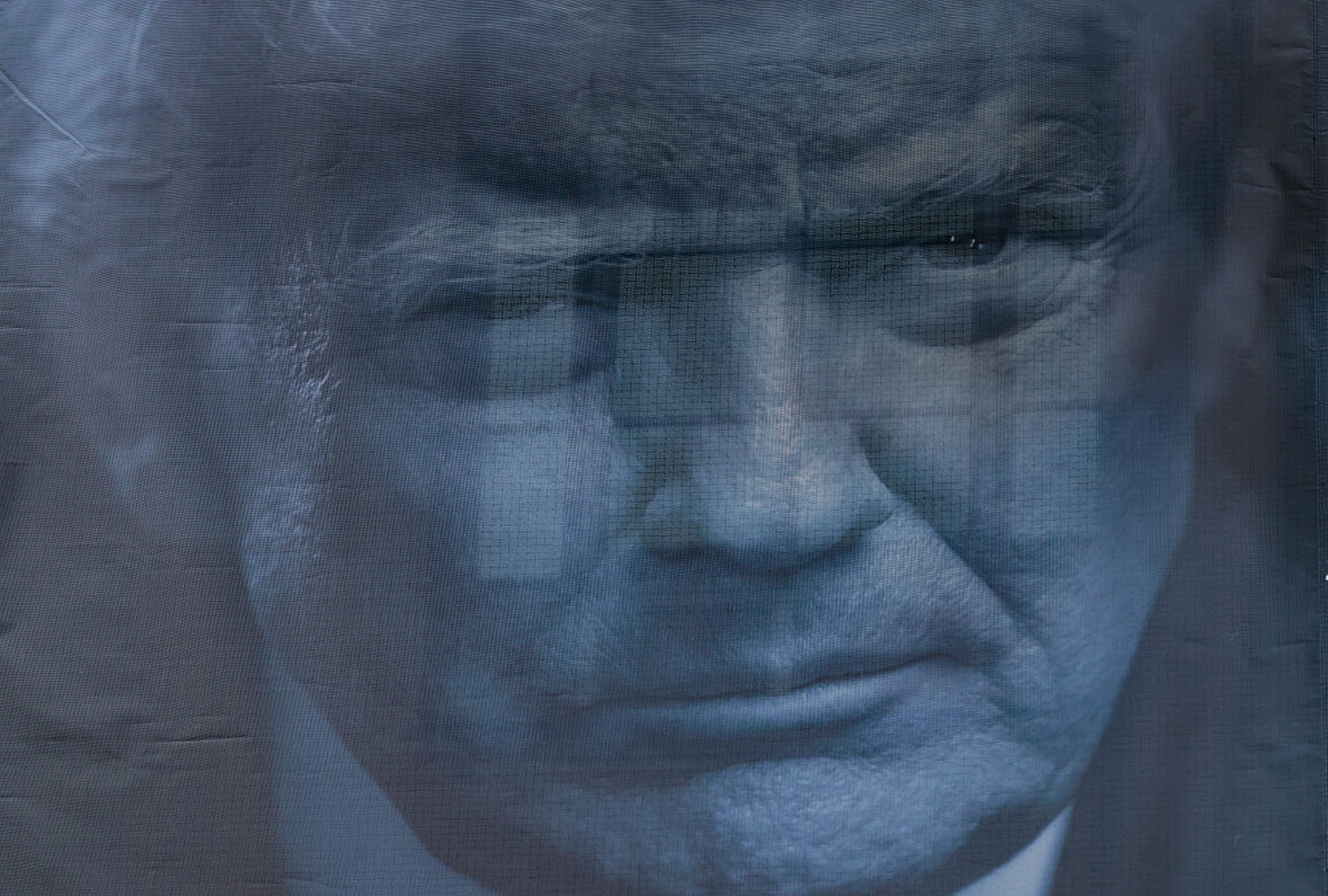
With his approval ratings at historic lows and his economic agenda in tatters after the Supreme Court ruled against the majority of his tariffs, Donald Trump will give his State of the Union address tonight to a joint session of Congress.
What will the president say? If you’ve been paying attention to his fundraising emails, then you already know.
Trump will attack his enemies in the deep state, along with other so-called traitors who hate America and the MAGA movement because he believes the country’s greatness and his administration are being torpedoed by the evil Democrats and the left. None of this, of course, is normal. This is the behavior of an authoritarian who conflates loyalty to the country with personal fealty.
But the president’s recent fundraising emails are part of a larger messaging campaign that has become increasingly menacing — even by Trump’s standards.
But the president’s recent fundraising emails are part of a larger messaging campaign that has become increasingly menacing — even by Trump’s standards. Like an obsessed former lover, the president has been telling his MAGA voters that he loves them but is hurt because they appear to be ignoring him. He is wounded that they don’t answer his multiple emails or pick up the phone when he calls. Trump’s emails also ask his supporters if they are avoiding him or if they have blocked his number.
Then his guilt-laden message turns threatening: “Does ICE need to come and track you down?”
In a spew of fundraising emails and social media posts in the lead-up to Valentine’s Day, Trump pleaded for his followers’ affection, declaring that his “love language is MAGA” and that he needs “MAGA hugs.” And in an especially disturbing fundraising email sent in the very early morning hours of Feb. 13, Trump evoked the image of a lonely lover pining for company. “I’m sitting here,” he wrote. “Alone. In the war room. Fighting for you. The rest of the staff went home hours ago. It’s just me, one dying laptop, and the 72-hour countdown clock to my first mid-month deadline of the year just RANG.”
Mocking these communications is easy. They are often dismissed by the mainstream media and pundits as weird and bizarre, evidence of Trump’s apparently troubled mind. They should instead be taken seriously as an example of the power he still exerts over his MAGA base, and how he won the hearts and minds of tens of millions of Americans in the first place — factors that have long proven a competitive advantage that Democrats have struggled to overcome in recent presidential elections.
Trump’s fundraising emails also demand attention as a matter of realpolitik. From small donors, the mega-rich and big business, he claims to have amassed more than $1.5 billion dollars in his political war chest. Public finance disclosures show more than $600 million across the Republican Party, its congressional super PACs and Trump’s own political machine. By comparison, the Democratic National Committee has only approximately $137 million dollars.
Research consistently shows that Trump’s MAGA followers, and today’s conservatives more broadly, exhibit an authoritarian personality and a social dominance orientation — they seek out strong leaders to submit to and follow who, in turn, give them permission to dominate and control some designated Other or perceived enemy.
Social scientists and other experts have also shown that members of authoritarian populist movements like MAGA appear more likely to feel socially isolated and alienated compared to other groups. In many ways, they are joiners who are seeking a political tribe and family.
Conservative authoritarians are also attracted to the strict father archetype and personality whom they believe will protect them against a dangerous world. But this strong father figure is also punitive in nature; they want to earn his approval to avoid being punished.
In total, the MAGA movement and Trumpism function as a type of unhealthy, undue influence organization — a type of political personality cult — where the members police each other by enforcing loyalty and groupthink.
In an email conversation, political psychologist Steven Ducat explained why Trump’s fundraising emails and larger communication style exert such a powerful hold over his MAGA followers. “[T]he leader is both the source of fear and the protector against it, it generates what social psychologist and cult researcher Alexandra Stein and others have called a trauma bond,” he said. “An examination of Trump’s email fundraising appeals on the eve of his State of the Union address shows his and his handlers’ reliance on this psychology. Trump is presented as a source of punishment and love, threat and promise.”
Want more sharp takes on politics? Sign up for our free newsletter, Standing Room Only, written by Amanda Marcotte, now also a weekly show on YouTube or wherever you get your podcasts.
Fear is also part of the equation, as former Republican and right-wing pundit Rich Logis wrote in a 2025 essay for Salon in which he observed that many MAGA supporters stick with the movement because they are afraid of “losing their community” and worry about being blamed by people on the left for having supported Trump.
Trump’s team knows this. Today’s political campaigns and their consultants and other experts have access to a vast amount of data, which they use for psychographic profiling, microtargeting, donor analytics and other sophisticated ways of modeling, predicting and manipulating voter behavior. His fundraising emails are not random. Instead, they are tailored to the psychological profiles of Trump’s MAGA followers and others, who appear to be receptive to the messaging.
As the president’s support among the American people continues to crater, he will seek to exert even more control over his base. They, in turn, will likely feel even more compelled toward Trump, whom many view as their Dear Leader and personal savior, a dynamic common to political and other forms of personality cults.
But like other such authoritarian movements, MAGA’s members and leaders will turn on each other if and when the movement finally collapses. As history has repeatedly shown, such movements do not implode in isolation; the American people and their democracy and society will be the collateral damage.
In a speech at last weekend’s Principles First summit, a conference dedicated to “restoring principled conservatism in America,” former commander of the U.S. Army’s European forces Gen. Mark Hertling offered a warning. “Our nation’s institutions have been shaken. Our alliances have been strained. Our credibility has been damaged. And our nation’s values have been cast aside.”
His voice breaking from emotion, the general predicted that reconstructing the nation’s democracy, civil society and standing in the world would take many years. “The question is not if we are going to return to what we once had,” Hertling observed. “The question is whether we will build something better.”
This fourth Reconstruction will require substantial investments in public education, arts and civic organizations. It will demand that we restore legitimacy to the rule of law by holding corrupt elites responsible for their crimes, support independent and local news media, address extreme wealth and income inequality, and strengthen the social safety net. Finally, it will call on us to protect and expand access to voting, and to also find ways to make elected officials more responsive to the needs and demands of the American people.
“Enough Americans still believe that principles matter more than power,” Hertling said. “We’re going to be…back, but only if we earn it.”
Read more
about MAGA