
Why the “Love Is Blind” experiment was doomed from the start
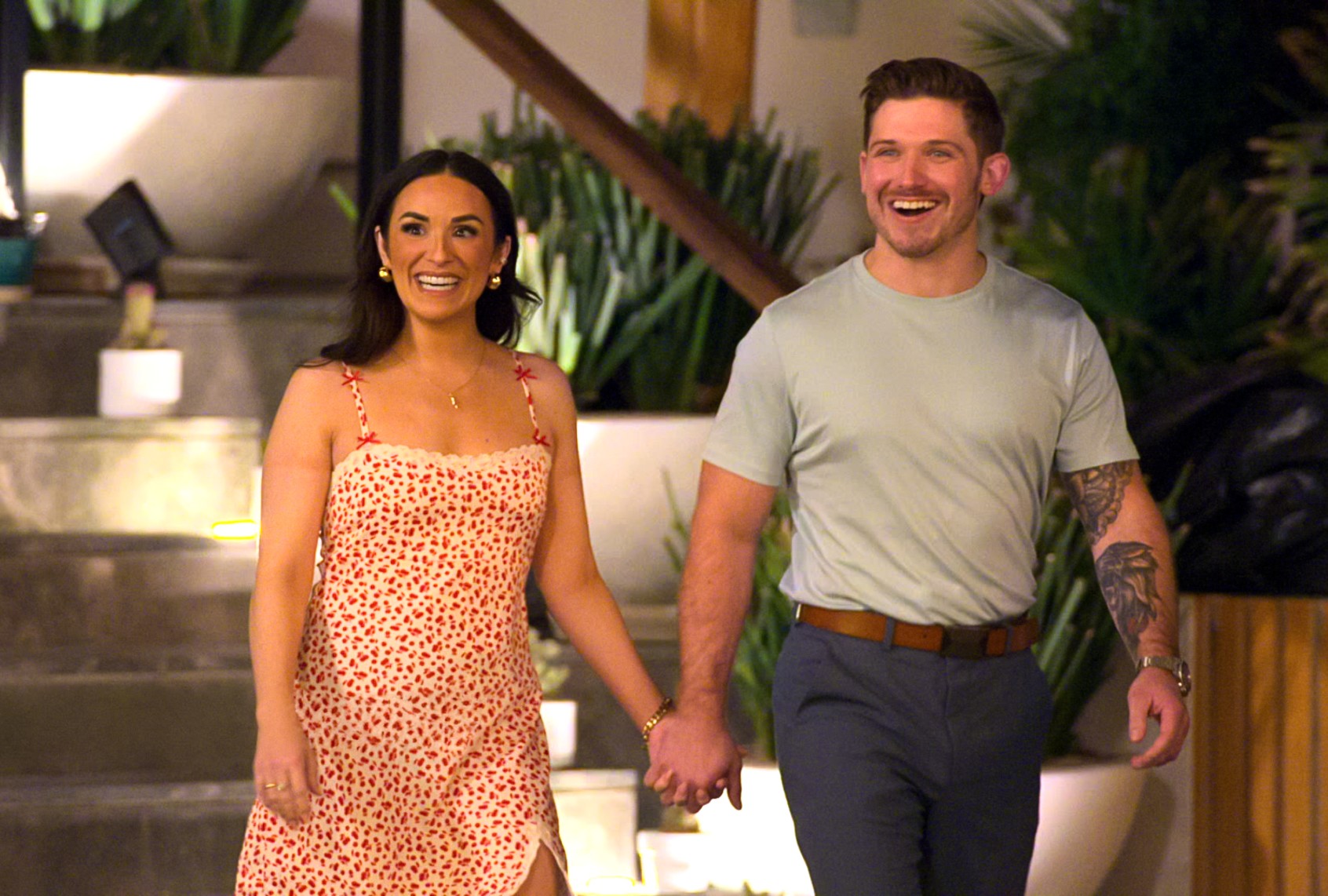
Surely Chris Fusco did not sign up for “Love Is Blind” to become its failure mascot, but here we are. For most of the romance reality show’s 10th season, the account executive seems like a standard-issue OK guy with a quirk about taking daily cold plunges. He said all the right things to his eventual fiancée, infectious disease physician Jessica Barrett, while they were dating. During their couples’ getaway in Mexico, both seemed to have a sexy good time.
Only when they return to Ohio, and Fusco lays eyes on his fiancée’s large and well-appointed home, does he transform into Mr. Hyde. Fusco sits her down in the apartment they share to discuss his problem with their relationship: her body. He’s used to dating women who keep it tight, he explains. And Barrett, who works the long hospital shifts required to save people’s lives, isn’t cutting it.
“So I’m trying to like, I don’t know. Somebody who works out all the time and has a different type of, I don’t know,” he stammers. “It’s just someone who does . . . Pilates every day, or someone who’s working out every day. In those situations, it’s hard for me to be like, physically, when we’re in that moment, into it.”
With saintly calm, the too-good-for-him Dr. Barrett packs her things and returns to her peaceful castle.
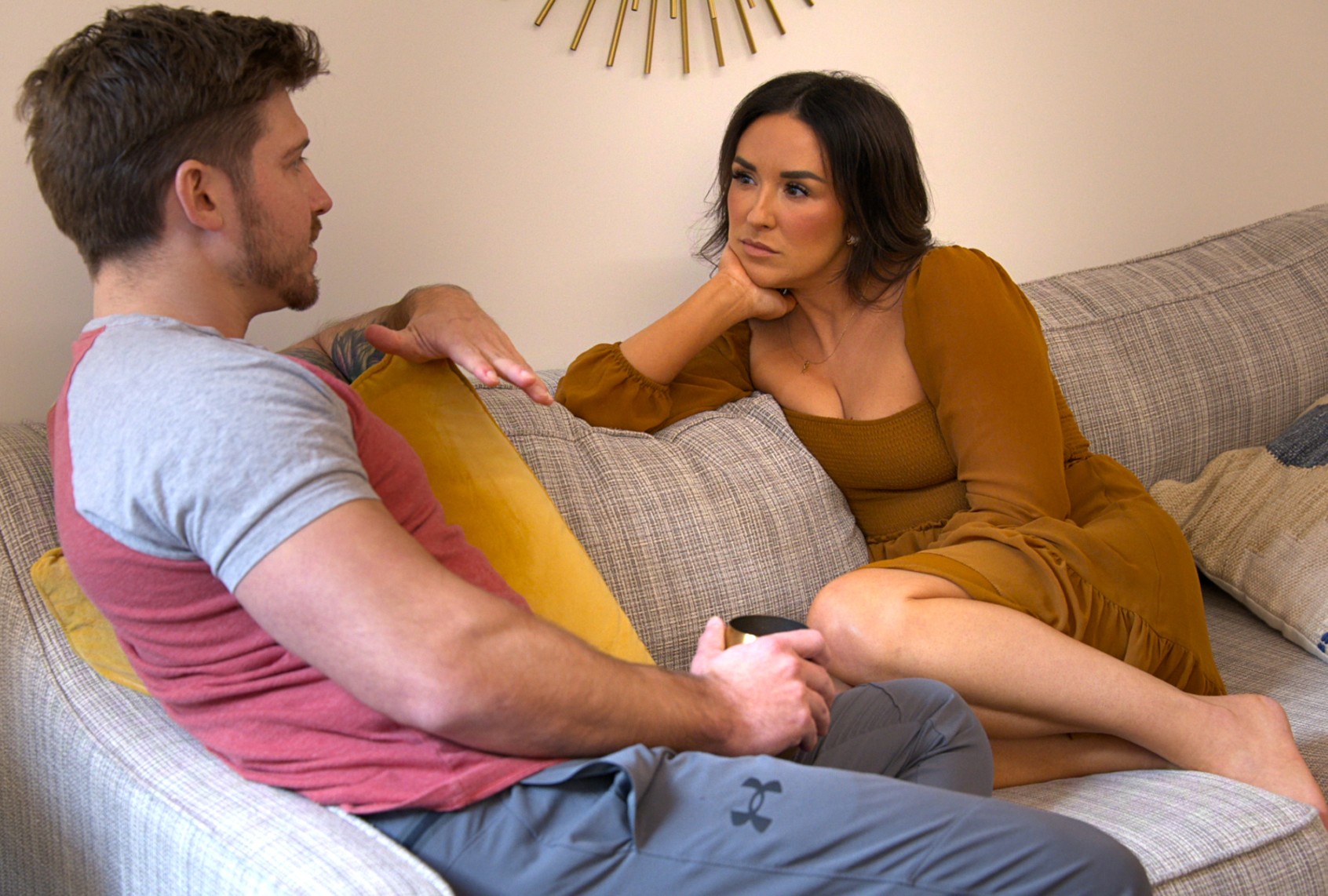
(Netflix) Jessica Barrett and Chris Fusco in “Love is Blind”
Later, at a couples mixer, Fusco drunkenly brays about how terrible the sex was. Then he tries to seduce his second choice, fellow cast member Bri McNees, by offering to whisk her away to the local Four Seasons and letting her know he has a Charles Schwab account. As he does this, Connor Spies, McNees’ intended, stands a few feet away.
We watch “Love Is Blind” for all the usual reasons. The mess? Sure. Its sense of romantic optimism? Not if you’ve been paying attention! But Chris Fusco’s “I’m just not that into smashing you” speech and boozy peacocking have made him the face of a moment. He’s a grade-A reality TV villain and a gift to content creators, fueling a slew of analyses and clapbacks. One TikTok user posted a video of his Pilates speech being projected onscreen in her psychology class, as a case study.
To women nodding along while reading tales of alpine divorces and ghostlighting filling their social media feeds, Fusco is the typical catch in the increasingly polluted dating pool. And to those who watch “Love Is Blind” while noticing an overall decline in our ability to relate to one another, he’s proof that the show’s matchmaking success rate probably was doomed to decrease over time.
Finding love has never been easy. I say this as someone who never had to deal with modern dating horrors, but has close friends who do, if they haven’t surrendered to heterofatalism entirely. My husband and I watch “Love Is Blind” with one of those nearest and dearest, and we three approach each season like rabid sports fans who are only in it to yell at the TV.
Since “Love Is Blind” was minted at the start of the pandemic, it follows that the further we get from its February 2020 debut, the more frequently antisocial patterns learned during lockdowns are emerging.
Pandemic technology reliance fostered an expectation of a frictionless existence, including in our romantic lives. Many of us are still figuring out that being around other people doesn’t work that way – and there’s no better evidence of how harsh that lesson can be than watching “Love Is Blind” in its later seasons.
The convenience technology that got us through the pandemic also made it easier than ever to avoid other people. Delivery apps reduced the need to leave the house for groceries and other supplies. Apps also facilitated no muss sexual encounters; nobody wanted to catch the virus, or feelings. This has been the case since the dawn of mobile devices and algorithmic personalization, but forced separations may have turned curt, unexplained goodbyes into a perceived relationship norm. The “Sex and the City” generation was left agog at their heroine being dumped via Post-It note; today, Carrie Bradshaw is just as likely to be abandoned by a suitor dropping their text thread without explanation.
Others try to resume them by picking up that chain months after they’ve left a date on read — or ghostlighting, as it’s been dubbed.
But then, a little frustration at a cowardly lack of social etiquette is better than, say, a date abandoning you in the middle of a wilderness hike, i.e., the alpine divorce.
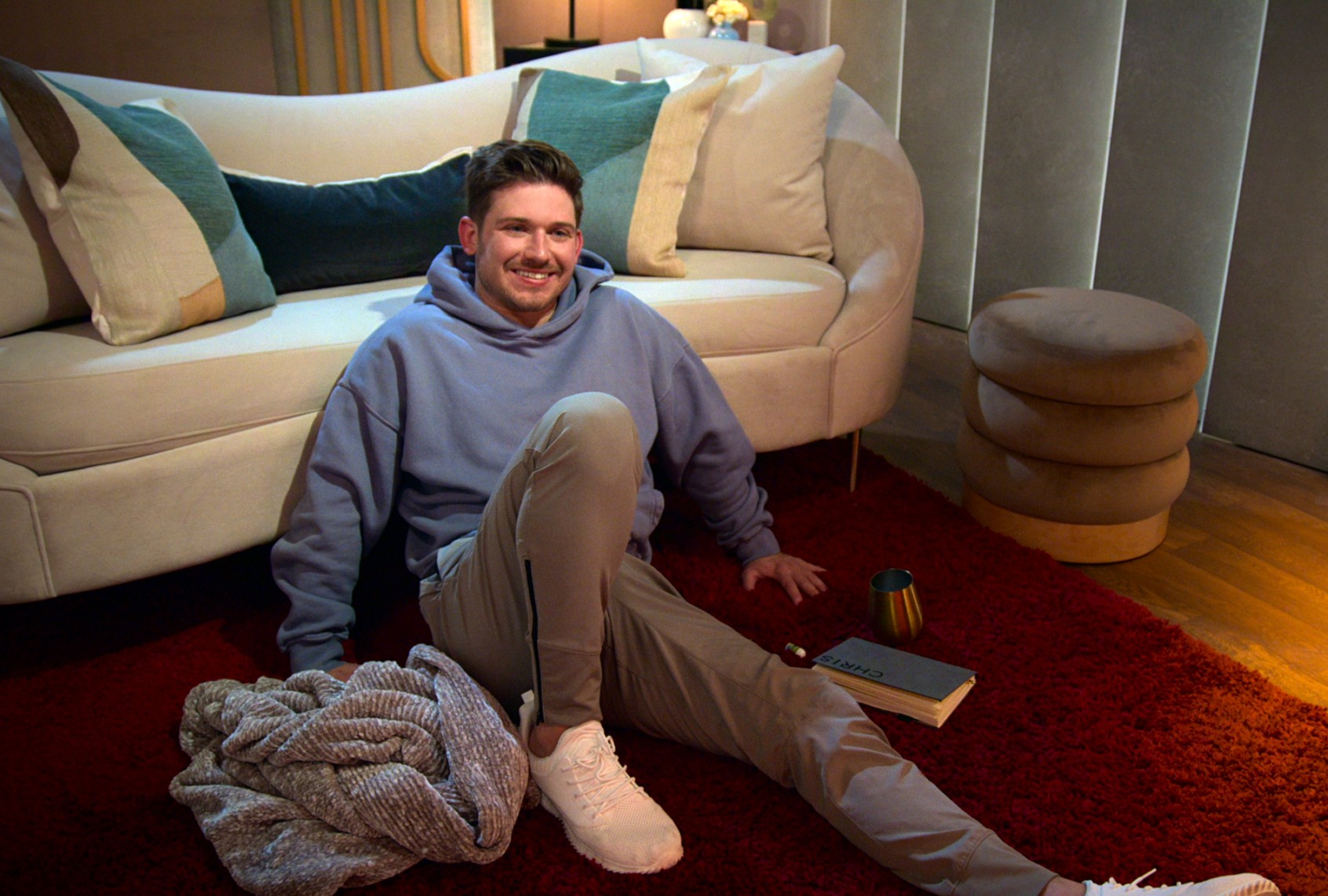
(Netflix) Chris Fusco in “Love is Blind”
Pandemic technology reliance fostered an expectation of a frictionless existence, including in our romantic lives. Many of us are still figuring out that being around other people doesn’t work that way – and there’s no better evidence of how harsh that lesson can be than watching “Love Is Blind” in its later seasons.
Mind you, smart women and men were making foolish partner choices ages before young men flocked to Andrew Tate, whom Fusco casually namedrops to McNees. In ye olden times, hapless manchildren genuflected before Erik von Markovik, aka Mystery, the high priest of the “seduction community” profiled in 2005 in Neil Strauss’ bestseller “The Game: Penetrating the Secret Society of Pickup Artists.” Mystery and his kind mainstreamed the practice of negging, which speculates that insulting a woman is the key to piquing her interest.
But that was when people were obligated to inconvenience themselves by leaving their creature comforts to rawdog the same air as strangers in bars. The simultaneous rise of social media and consumer apps removed that complication. Tinder’s 2012 launch moved the mating hunt onto our phones, and now single servings of strangers can mosey right to your doorstep. As for those less inclined to submit to some digital catalog call, there are and have always been chatrooms, forums, and online gaming communities enabling like-minded people to gather without meeting in the flesh.
“Love Is Blind”’s gamification dangles the promise of a deeper emotional connection, which was especially appealing when lockdowns closed community third spaces and further cemented TV as a dominant cultural hub.
For a few couples, its premise has worked. Season 1 matched Lauren Speed-Hamilton and Cameron Hamilton. Season 4 united Tiffany Pennywell and Brett Brown; their marriage is still going strong, as are those of fellow participants Chelsea Griffin and Kwame Appiah, and Bliss Poureetezadi and Zack Goytowski.
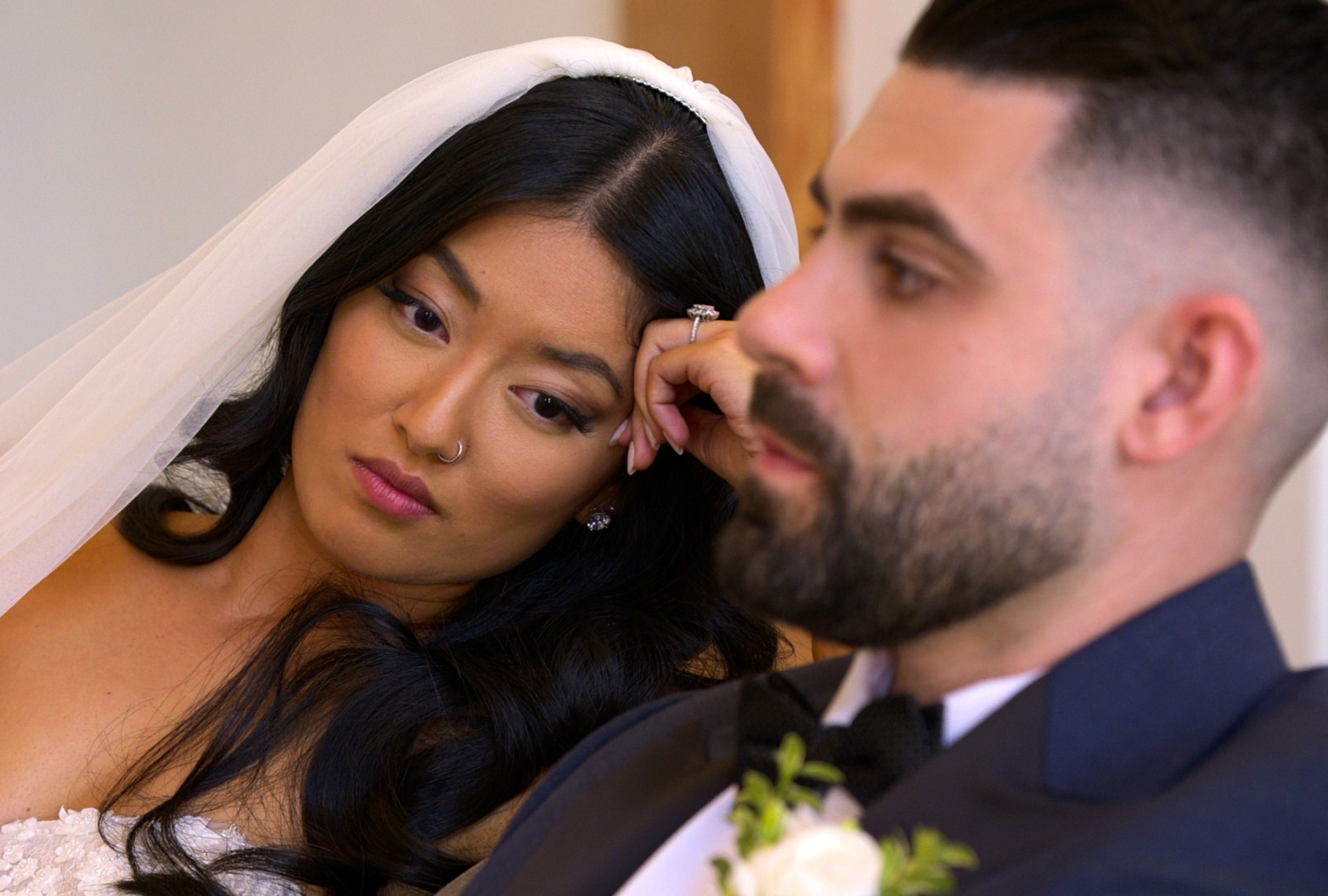
(Netflix) Emma Betsinger and Mike Gibney in “Love is Blind”
But the show’s marriage track record petered out since, coinciding with a reported rise in global loneliness that hasn’t abated since the world reopened — that, and the mainstreaming of casual misogyny. You may even recognize manosphere dictums sprinkled within otherwise normal-seeming conversations on “Love Is Blind” — comments equating dominance with male desirability and drawing a correlation between a man’s annual salary and his masculinity. Or defining a solid relationship as one where a woman isn’t too much of a bother.
Witness the tortured love story of Emma Betsinger and Mike Gibney. Betsinger is a childless-by-choice adoptee, concerned that her potential children might inherit the cancerous skin condition that required her to undergo multiple surgeries. Gibney, who has never lived with a woman, wants a womb of his own. He proposes to her, intending to change her mind while assuring Betsinger and her loved ones that he isn’t pressuring her. Then he ditches her at the altar.
It’s getting increasingly apparent that this experiment’s purpose isn’t to see whether love is blind, but whether there’s any hope of finding it at all.
Day trader Alex Henderson confuses his betrothed Ashley Carpenter with a shifting backstory involving frequent moves and overlapping dating histories, all attributed to his “nomadic lifestyle.” In the same argument where he issues a veiled suggestion that Carpenter abandon her job, he blames his lack of sexual initiation on her menstrual cycle.
Meanwhile, Brittany Wicker says yes to Devonta Anderson soon after they begin dating, but when he discovers she said yes to her wedding dress before they met, he finds that scary and clingy. The slightest hint of conflict sends him marching off in a silent funk, actually. When they call off the wedding, Wicker chooses to see that decision as a relationship pause, while Anderson bids her farewell by saying, “We will be in touch,” with the soulless formality of a Truth Social post sign-off. (“Thank you for your attention to this matter.”)
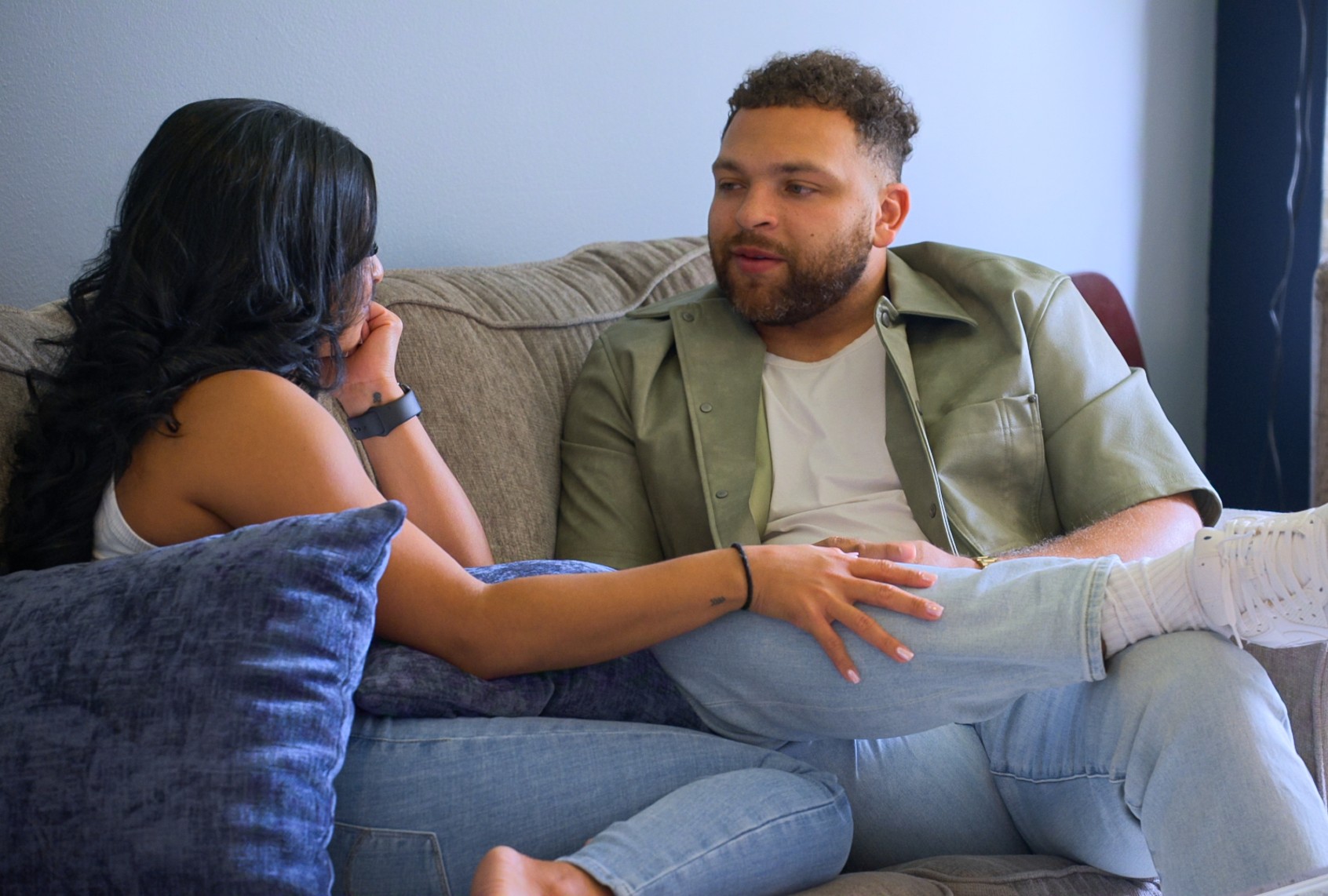
(Netflix) Brittany Wicker and Devonta Anderson in “Love is Blind”
Survey after survey places statistics behind anecdotal testimonies about our inability to romantically connect. A January 2025 report from the Survey Center on American Life found that 57% of single men and 54% of single women feel pessimistic about finding a suitable partner, although there are more single young men (59%) than similarly unattached young women (44%). You’ve no doubt read about the male loneliness epidemic, but more recent findings by Pew Research Center show that young women are equally as lonely, with 16% of men and 15% of women reporting feeling “lonely or isolated all or most of the time.”
Some theorize that women more effectively cultivated their alone time during the pandemic, choosing to develop new skills or prioritize self-care.
Of course, based on what Henderson, Gibney, Anderson and Fusco claim, it’s not that they lack for a social life but, rather, a similarly disposed person who offers none of the conflict inherent to any relationship with a real live human.
Want more from culture than just the latest trend? The Swell highlights art made to last.
Sign up here
Against all odds, Season 10 yielded two marriages. Christine Hamilton and Dr. Vic St. John got engaged so quickly and exhibited so little tension that people called them adorable but boring or, worse, ringers. They were spared the unease of the Cabo San Lucas couples retreat and sent to Malibu instead due to budgetary restrictions and their lack of triangular tension.
Their relative normalcy, and that of fellow marrieds Amber Morrison and Jordan Faeth, is a soothing contrast to the textbook Fusco fiasco and the rest of the season’s red flag bearers. But it’s getting increasingly apparent that this experiment’s purpose isn’t to see whether love is blind, but whether there’s any hope of finding it at all. In America, we should say.
The good news is that the show’s format has been replicated in many other countries. Our domestic selections may be going the way of Fusco, but I hear Sweden is for lovers. Maybe I need to watch that version to find out.
The “Love Is Blind” 10th season reunion episode debuts at 6 p.m. PT/ 9 p.m. ET Wednesday, March 11, on Netflix.
Read more
about “Love Is Blind”