
VAR review: Did Chelsea get away with what should’ve been a penalty for Fulham?
Video assistant referee causes controversy every week in the Premier League, but how are decisions made and are they correct?
This season, we take a look at the major incidents to examine and explain the process both in terms of VAR protocol and the Laws of the Game.
 Andy Davies (@andydaviesref) is a former Select Group referee, with over 12 seasons on the elite list, working across the Premier League and Championship. With extensive experience at the elite level, he has operated within the VAR space in the Premier League and offers a unique insight into the processes, rationale and protocols that are delivered on a Premier League matchday. (Screenshot credit: NBC)
Fulham 2-1 Chelsea
Referee: Peter Bankes
VAR: John Brooks
Time: 22 minutes
Incident: VAR confirmed Fulham wouldn’t be awarded a penalty
What happened: A long ball by Fulham keeper Bernd Leno found Harry Wilson, who broke clear of Chelsea fullback Marc Cucurella and found himself through on goal. Cucurella grabbed the arm of Wilson, committing a holding offence on the edge of the penalty area. Referee Peter Bankes awarded a free kick and sent Cucurella off for a DOGSO (denial of an obvious goal scoring opportunity).
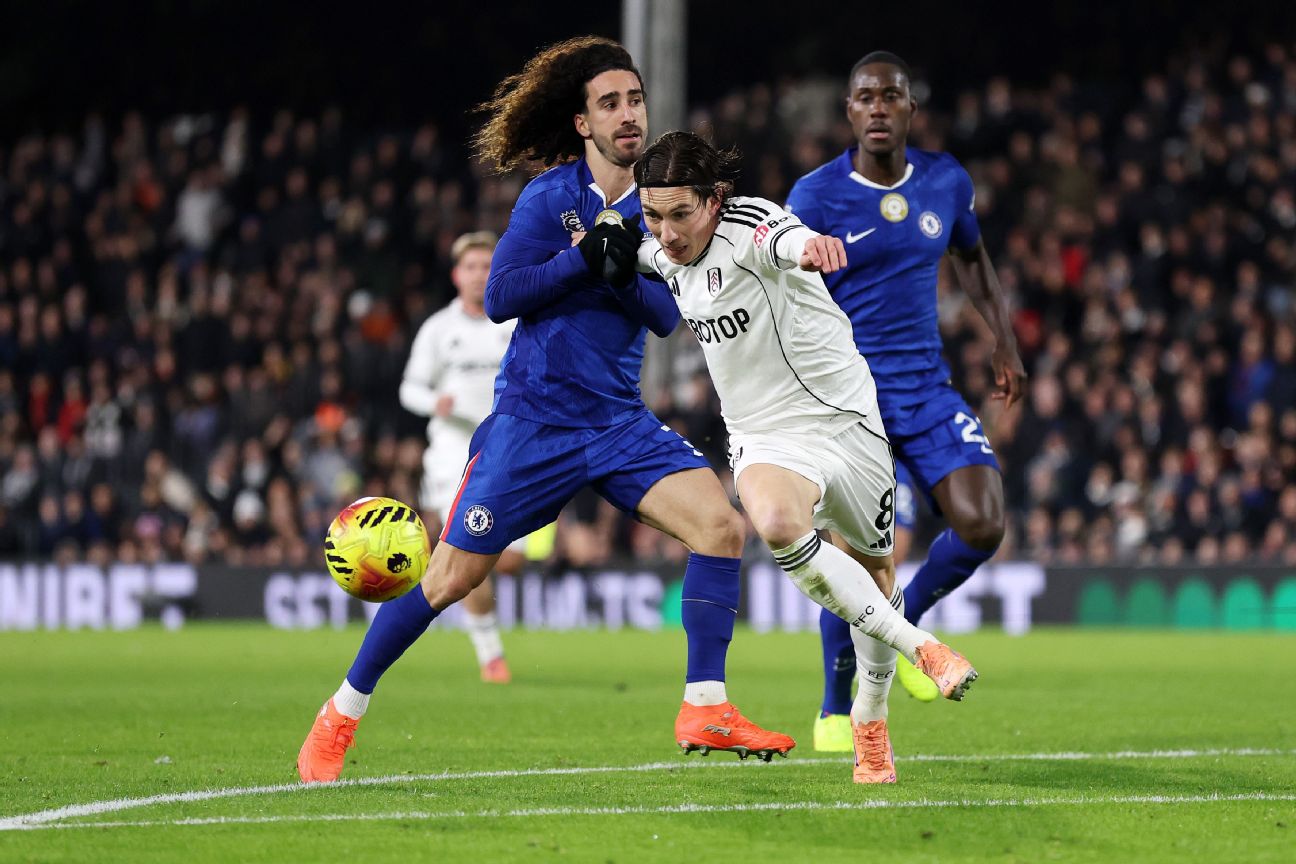
VAR decision/review: With a clear DOGSO holding offence committed by Cucurella, which was recognised on field by the match referee, the only check for VAR John Brooks was to ensure that the holding offence did not continue into the penalty area, which would’ve resulted in a penalty kick.
Verdict: This is an incredibly close call from the VAR and one that could have gone either way.
Some TV angles suggest that Cucurella still had hold of Wilson as they hit the penalty area line, however the evidence would need to have been conclusive to change the outcome, so the VAR clearly had some doubt.
Manchester City 1-1 Brighton
Referee: Tom Bramall
VAR: Alex Chilowicz
Time: 38 minutes
Incident: Man City earned a penalty kick after a foul in the box
What happened: Brighton defender Diego Gómez challenged Jérémy Doku in the penalty area. Referee Tom Bramall waved away the penalty appeals.

VAR decision: VAR was very quick to recommend an OFR (on-field review) for a possible penalty for a careless foul challenge by Gómez.
VAR review: A quick and straightforward review for VAR Chilowicz as the replays showed a clear careless challenge by the Brighton defender. Once referee Bramall had reviewed the incident, he was quick to agree and gave Man City a penalty kick.
Verdict: Correct VAR intervention and final outcome in this situation. Gómez was lazy with his challenge and whilst it wasn’t a high level of contact, he made no contact on the ball, and impeded Doku’s progression in the penalty area.
The referee will be disappointed that he didn’t recognise the careless foul in real-time as it was a relatively straightforward and expected decision. He moved himself into a really good position, however, sometimes decisions can look too obvious in real-time, and you doubt yourself — this can be the only credible rationale for this incident.
Everton 1-1 Wolverhampton
Referee: Tom Kirk
VAR: Chris Kavanagh
Time: 80 minutes
Incident: Wolves had a player sent off for violent conduct
What happened: An aerial challenge between Everton’s Michael Keane and Wolves striker Tolu Arokodare resulted with Arokodare on the ground, complaining that Keane had committed a violent foul against him.
VAR decision: VAR recommended an OFR for possible violent conduct by Keane on Arokodare.
VAR review: Once the replays had been reviewed by VAR Chris Kavanagh, it was a straightforward decision to recommend an on-field review to Tom Kirk for a possible red card for violent conduct. Keane clearly pulls the hair of Arokodare whilst engaged in an aerial challenge and there was no doubt about the outcome.
Once the referee had reviewed the footage himself, he agreed that a clear offence had been committed and sent off Keane.
Verdict: Correct and positive intervention by VAR in this incident, with an act of violent conduct clearly committed by the Everton defender.
Considering the body positions of both players, it would not have been possible for the referee to recognise this offence in real-time. This was a great example of why VAR was introduced at the elite level and highlighted the process at its best.