
How Putin won the war, with a little help from his friends
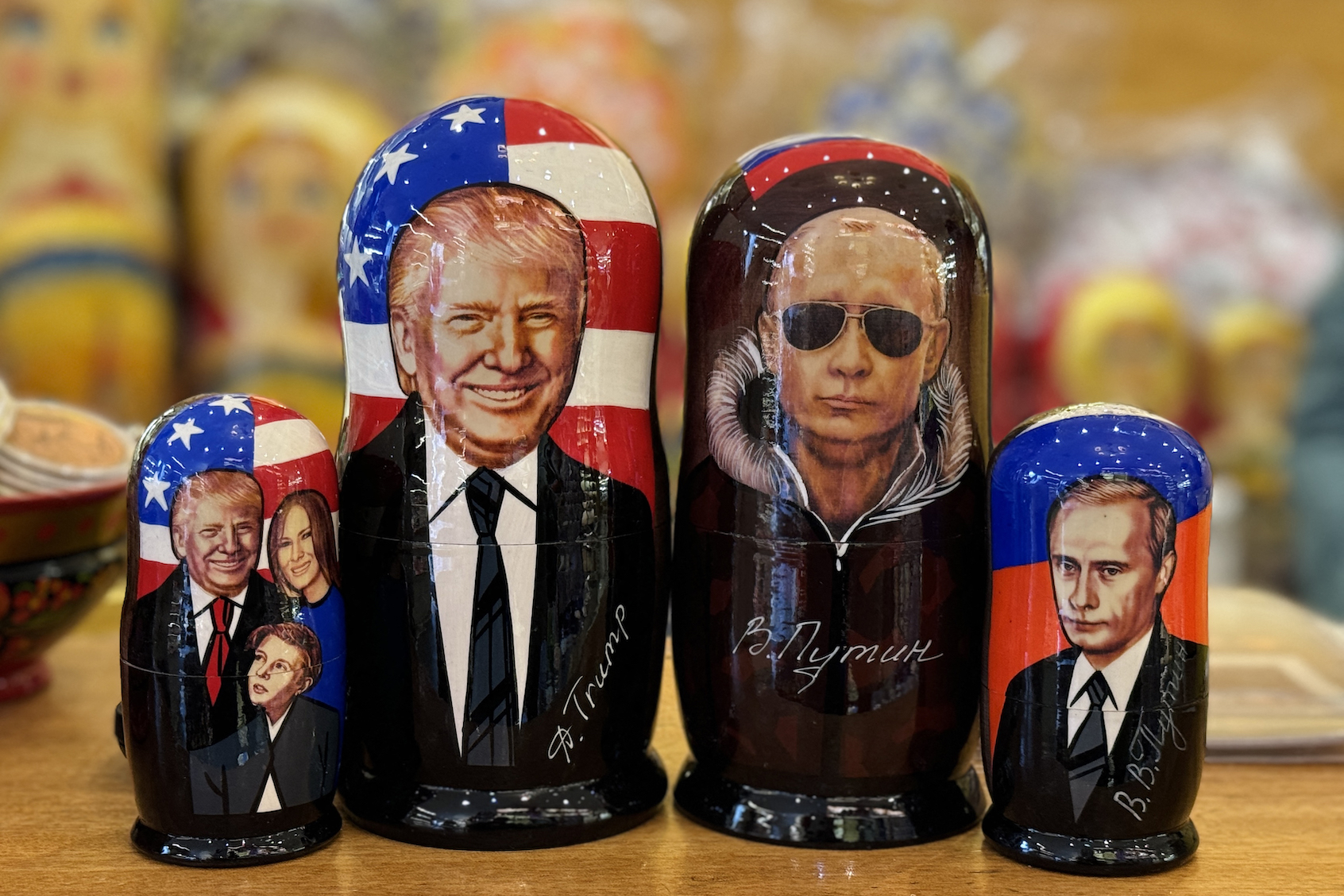
It’s time to face a paradoxical but unavoidable fact: Russia’s war in Ukraine, which has consistently been presented by Western commentators over the last three years as a catastrophic failure, is nothing of the kind. In larger strategic terms, Vladimir Putin almost certainly now believes that his “special military operation” has accomplished its most important goals. If he hasn’t conquered or subjugated Ukraine, or at least not yet, he has exposed the fundamental weakness of the so-called Western alliance, and may have fractured it permanently.
To state the obvious, Donald Trump’s second presidency has been immensely helpful to Putin’s war effort, but no byzantine conspiracy theories involving kompromat videotapes are required. Trump admires Putin and craves his admiration in return, for familiar and pathetic psychological reasons. But there’s no evidence that Putin views Trump as a trustworthy partner, only as a stooge he can easily manipulate. As for Trump’s surrender-lite Ukraine “peace plan,” which may have been crafted by the Russians in the first place, at least it brings the painful contradictions of this war to the surface: There is no exit strategy from the Ukraine quagmire, now or in the foreseeable future, that does not involve giving Putin most of what he wants.
There is, or at least was, plenty of evidence to support the Western media and political narrative that Russia was losing the war, or was likely to lose it, or at least might. The initial invasion of Ukraine in 2022 was clearly based on major strategic miscalculations and involved enormous tactical blunders, followed by humiliating retreat. If Putin and his generals believed their own propaganda that Ukraine was a wayward province of Mother Russia that would capitulate with little resistance, they quickly learned otherwise.
Despite internal divisions and a largely dysfunctional government, Ukrainians united behind their unlikely president and fought back with immense courage and resourcefulness — as well as countless billions in overt and clandestine assistance from the U.S. and its allies. Under Joe Biden’s administration, the conflict became an unconcealed proxy war between Russia and a seemingly unified Western alliance. Defense Secretary Lloyd Austin and various military leaders spoke confidently (although largely off the record) about winning back all the Ukrainian territory lost since the first Russian incursions in 2014, and either driving Putin into his corner in defeat or, in their more elaborate fantasies, bringing down his regime altogether.
Well, pride goeth before the fall and all that. If Biden and his advisers believed that they understood their opponent’s weakness and how to exploit it, on the other side of the equation Putin believed exactly the same thing. It’s tough to avoid the conclusion that his analysis was more accurate.
There’s no doubt that Russia’s military and Russian society have paid a terrible price for this war, worse than outsiders will ever know. Even by conservative estimates, hundreds of thousands of soldiers have been killed or wounded, not to mention the enormous and expensive losses of military hardware and damaged infrastructure. Western leaders assumed that Putin’s regime was too fragile to withstand that level of social and economic damage, which may have been a critical mistake. Russian leaders have a long history of treating their young men as expendable cannon fodder who die in defense of the motherland, and those tales of mass sacrifice are deeply encoded in national mythology.
As Foreign Policy columnist Michael Hirsh writes,“far more unanimity of opinion exists on the Russian side in support of the invasion than on the Western side against it.” Scholar Maria Snegovaya tells him that Western politicians and policymakers “are deceiving themselves” if they believe that Russian public opinion has turned against Putin or the war, and that even younger Russians “remain ‘unusually united’ in blaming the West for provoking Putin into war.”
The Ukraine conflict looks entirely different from the Russian perspective than it does from the so-called West. Both sides are entrenched in ideological narratives that tell some parts of the story and ignore others.
Similarly, analysts tell Hirsh that sanctions imposed by the U.S. and European nations have done only modest damage to Russia’s domestic economy. Indeed, they may have backfired by solidifying Russia’s economic alliances with China and India, which have kept on buying Russian oil and gas, sometimes through intermediaries or by using false-flag tankers. After his Ukraine talks with Trump envoys Steve Witkoff and Jared Kushner in early December, Putin flew straight to India and “struck a series of economic and military deals” with Prime Minister Narendra Modi.
One of the most important aspects of the Ukraine conflict is also among the most difficult to grasp: It looks entirely different from the Russian perspective than it does from the so-called West. Both sides are entrenched in ideological narratives that tell some parts of the story and ignore others.
For many Europeans and Americans, understanding this war as a David-and-Goliath narrative or even an updated Battle of Britain — Ukraine as a lonely democracy, fighting for freedom against a tyrannical invader — carries a powerful historical resonance. But a historic sense of grievance also drives the narrative behind Putin’s war, which is partly about the mythical or mystical connection between Russia and Ukraine, partly about resisting Western decadence and corruption — which are blamed, not entirely without reason, for the poverty and misery of the post-Soviet years — and a lot about reversing several decades of national humiliation.
Want more sharp takes on politics? Sign up for our free newsletter, Standing Room Only by Amanda Marcotte, also a weekly show on YouTube or wherever you get your podcasts.
It is precisely the collision and contradiction between those narratives, and the extent to which Ukrainians are trapped inside them or between them, almost as supporting characters in other people’s fables, that has led the world into this seemingly unresolvable crisis. I’m not saying that those narratives are morally equivalent, or that some vague sense of historical grievance and perceived hostility is a valid excuse for launching an unprovoked war against a neighboring country. But I am saying that Putin perceived the weakness of the Western narrative, and Western leaders failed to perceive the strength of his.
Trump has been a big help to Putin, as previously stated. There’s no way to know how a Kamala Harris administration might have approached this crisis, but it’s fair to say that Putin’s view of Western liberal democracy was the same, with or without Trump: It was a paper tiger and a failed system, lots of posturing and big words but no action. He saw the U.S., first of all, as a rapidly declining superpower that lacked the political will and self-confidence for any coherent strategic response to the Ukraine invasion. Europe, meanwhile, was a confederation of internally conflicted American client states, plagued by mass immigration and economic stagnation and lacking any unified foreign policy or military force.
Putin saw the U.S., first of all, as a rapidly declining superpower that lacked the political will and self-confidence for any coherent strategic response to the Ukraine invasion. Um, yeah.
Um, yeah. Correct on both counts. No doubt he expected a much easier and less painful military victory, but even as the war unfolded into a gruesome stalemate, Putin came to understand that as long as Russian forces kept grinding away, he held the upper hand. Any possible resolution to the conflict involved unpalatable options for the increasingly divided Western allies: It was almost inconceivable (and is even more so today) that they would launch a unified military response aimed at recapturing all of Ukraine’s lost territory, risking all-out war with Russia over a non-EU, non-NATO nation. The other option, in all likelihood, is a more politely phrased, face-saving version of the current Trump plan, in which Ukraine gives up big chunks of territory in exchange for “security guarantees” that everyone knows are temporary, conditional and not worth much.
Ukraine’s people do not seem ready to surrender, at least not yet. Europe’s embattled centrist political leaders seem prepared to help them fight on, with or without American aid, in hopes of a military breakthrough, an internal crisis in Russia or simply a better deal. There is honor in courage and hope, and none of us can see the future. But we can see the recent past, when too many of us who live thousands of miles away and were never touched by this war told ourselves a story about what it meant and how it would go. Like so many of the stories Americans tell about the world, it wasn’t true.
Read more
from Andrew O’Hehir