
RFK Jr.’s vaccine overhaul puts pregnant women and children at risk
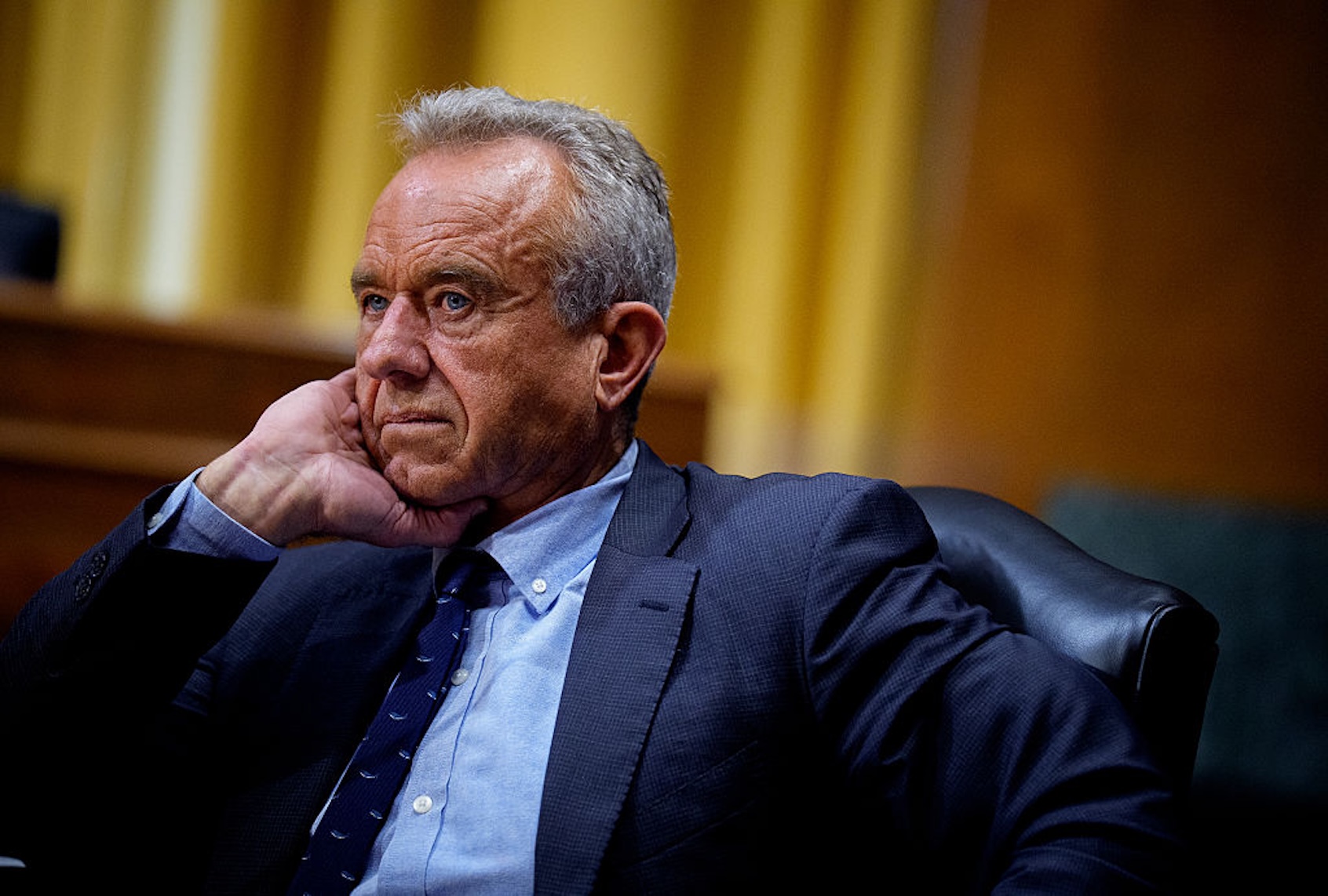
On Friday, the Advisory Committee on Immunization Practices voted 8-3 to end its recommendation that all infants receive a vaccine for hepatitis B at birth.
The vote came after a contentious discussion on Thursday, and days after Vinay Prasad, director of the FDA’s Center for Biologics Evaluation and Research (CBER), claimed in a memo obtained by multiple news outlets, but not made public, that the COVID-19 vaccine caused the death of 10 children. The allegation was made without any known evidence. The current vaccine approval process, Prasad said in the memo, “falls short.”
Public health experts sounded the alarm that overhauling the childhood vaccine process could reduce accessibility to vaccines for children and pregnant women and put their health at risk.
“This irresponsible and purposely misleading guidance will lead to more hepatitis B infections in infants and children,” Dr. Susan J. Kressly, president of the American Academy of Pediatrics, said in a media statement. “I want to reassure parents and clinicians that there is no new or concerning information about the hepatitis B vaccine that is prompting this change, nor has children’s risk of contracting hepatitis B changed. Instead, this is the result of a deliberate strategy to sow fear and distrust among families.”
Since 1991, ACIP has recommended a hepatitis B vaccine for all infants, which has resulted in a 99% drop in severe infections between 1990 and 2019. The organization now recommends administering the first dose of the hepatitis B vaccine 30 days after birth, for all children whose mothers tested negative for the disease, instead of receiving the first dose within the first 24 hours of life.
In a press conference days before the vote, Dr. Raynard Washington, chair of the Big Cities Health Coalition, said any barriers “created by bureaucracy or process certainly do pose a threat to the public’s health.” A suggested delay in administering the vaccine “could result in families not having access to hepatitis B vaccines,” he said.
Details on how this will play out in real life remain unclear. However, hypothetically putting that responsibility on pregnant people — having to determine whether or not to give their newborn the dose right after birth or wait 30 days — would be “completely irresponsible,” Washington said.
“All the things happening at the point of birth and having to think specifically about a Hep B vaccine, that responsibility should not go back to a parent, independently,” Washington said. “We should be able to have providers able to help parents make those decisions.”
Delaying the dose, Washington added, also puts the newborn at risk of developing an infection.
At a separate press conference, Dr. Sean O’Leary, chair of the AAP Committee on Infectious Diseases, warned the U.S. is now entering a “dangerous new phase in Secretary Kennedy’s campaign to shut down scientific expertise, silence the best available evidence, and replace it with his own personal agenda.”
“The childhood immunization schedule is an important framework that we use to protect children from harmful and potentially deadly childhood diseases,” O’Leary said. “And every vaccine on that schedule and the recommended timing of it exists for a reason.”
The timing of each dose for a child is “critical,” and is based on the age when a child’s immune system can provide optimal protection after vaccination. The timing is a balance between the earliest time protection can be provided and the age at which the child is at highest risk for the disease.
“There’s no reason to delay or space out vaccines,” O’Leary said. “Doing so just puts children at risk.”
O’Leary said any changes made could be devastating to children’s health and public health as a whole.
“I also want to remind everyone that AAP releases its own recommended childhood vaccine schedule,” O’Leary said. “We’ve done that since the 1930s.”
In the memo obtained by outlets earlier this week revealing more details about Kennedy’s vaccine agenda, Prasad told FDA staff that the agency plans to also re-evaluate yearly flu-shot policies, consider limits on simultaneous vaccinations and require stricter safety and efficacy data from pharmaceutical manufacturers before approval. There was also a focus on vaccines in pregnant women. Prasad said that COVID-19 vaccines had not been tested in randomized controlled trials in pregnant women, which is true. But the memo failed to weigh the potential risks of vaccines against the risks of being unvaccinated. There have been several reports of pregnant women — particularly those with comorbidities — becoming critically ill from COVID-19. According to the Centers for Disease Control and Prevention, pregnant women have a higher risk of severe outcomes of COVID-19 than those who aren’t pregnant. The same is true for influenza.
Start your day with essential news from Salon.
Sign up for our free morning newsletter, Crash Course.
Stephanie Gaw, an assistant professor at the University of California, San Francisco’s Center for Reproductive Sciences, told Salon that the possible requirements for pregnant people and vaccines would “put pregnant patients at an even greater disadvantage in regards to access to life-saving vaccines.”
“Trials to demonstrate a reduction in disease burden require thousands of study participants, which would be incredibly costly and likely unachievable in a reasonable time frame,” Gaw said. “This approach is also inefficient—we have an abundance of data that antibody responses are an excellent proxy measure for vaccine effectiveness against disease.”
Gaw pointed Salon to studies published in Nature Medicine and Science Translational Medicine.
“While it may seem that safety will be improved with higher standards for efficacy prior to approval, I fear that this new policy will actually harm people by setting the bar too high,” Gaw said.
Meanwhile, public health departments are already struggling with local vaccine access. For example, Phil Huang, the director and health authority of Dallas County Health and Human Services, said his department has felt the reduction in COVID-19 vaccination funding firsthand. He attributed 27 staff layoffs to the decline in funding and the cancellation of 50 community outreach events. The U.S. Department of Health and Human Services (HHS) canceled $500 million in funding for mRNA vaccines being developed earlier this year.
“We’ve been under-resourced for some of the immunization activities,” Huang said. “The COVID funds were not just used for COVID, but really to support all of our vaccination efforts, and so that has definitely impacted us with less staff.”
As for the hepatitis B vaccine, the AAP will continue to recommend the first dose within the first 24 hours of life.
“All babies should receive a first dose of the hepatitis B vaccine within 24 hours of birth, a second dose at one to two months, and a third dose at six months,” Dr. Kressly said. “The pacing of these doses has been rigorously tested and proven to be safe and effective over several decades.”
Read more
about RFK Jr.